10/10
1/10
6/10
10/10
9/10
10/10
The Architecture of Absolute Control: The Monster at the Head of the Table
There is a specific, agonizing brand of terror reserved for the spaces where we are supposed to be safest. Supernatural horror often relies on the invasion of the home—a ghost crossing the threshold, a demon hiding in the closet, a masked killer breaking through the glass. But Mike De Leon’s Kisapmata (1981) understands a much darker, far more insidious truth: the most terrifying horror occurs when the monster already owns the house, holds the deed, sits at the head of the dining table, and insists that you call him "Father." Based on Nick Joaquin’s chilling true-crime reportage "The House on Zapote Street," this towering masterpiece of Philippine cinema is a grueling, psychologically brutal exercise in domestic terror. It is a film of harrowing, suffocating beauty that systematically dismantles the idealized facade of the nuclear family, leaving the viewer entirely breathless and spiritually bruised.
The narrative tracks the agonizingly slow closing of a trap. Mila (Charo Santos), a young woman suffocating under the iron-fisted control of her retired-police-officer father, Dadong (Vic Silayan), attempts to buy her freedom through marriage. She weds her mild-mannered, deeply ordinary coworker, Noel (Jay Ilagan), believing that the patriarchal transfer of ownership from father to husband will finally grant her autonomy. But De Leon masterfully subverts the traditional escape narrative. Dadong does not rage against the marriage; instead, he completely co-opts it. Through a terrifying blend of financial manipulation, emotional blackmail, and veiled physical threats, he forces the newlyweds to move into his home. What begins as a desperate bid for freedom rapidly rots into a claustrophobic nightmare, as Dadong systematically isolates the couple, stripping away their privacy, their dignity, and their sanity.
To discuss Kisapmata is to grapple with the monumental, terrifying gravity of Vic Silayan’s performance as Dadong Carandang. Silayan crafts a villain of staggering banality and absolute malice, delivering one of the most frightening performances in the history of cinema. Dadong is not a monster of the shadows; he operates in the stark, unforgiving daylight of middle-class respectability. He is a dictator who smiles genially to the outside world while subjecting his family to invisible, psychological torture. Silayan plays the patriarch with an eerie, reptilian stillness. He doesn’t need to raise his voice to command the room; his quiet, smiling ultimatums are enough to drop the temperature of a scene below freezing. Most disturbing is the profoundly dark, unspoken incestuous undercurrent to his obsession with Mila. The film never explicitly shows abuse, yet the way Dadong looks at his daughter, the way he casually invades her physical space, and his outright refusal to let another man truly "have" her, crawls right under your skin and stays there. It is a possessiveness that transcends parental overreach and enters the realm of pure, demonic ownership.
The psychological brutality inflicted upon the victims is devastating to witness because it is so paralyzingly authentic. Charo Santos’s Mila is the tragic heart of the film, a portrait of a caged bird who has forgotten how to fly. Santos perfectly captures the agonizing paradox of abused children: the desperate, burning desire to escape warring with an ingrained, almost cellular submission to the abuser. We watch as her initial sparks of defiance are slowly snuffed out by the sheer, grinding exhaustion of living under constant surveillance. Jay Ilagan’s Noel represents the naive outside world—a decent, unremarkable man utterly unequipped to battle the insidious psychological warfare waged within the Carandang walls. We watch Noel's masculinity and agency be methodically dismantled, piece by piece, until he is reduced to a helpless captive in his own marriage. Yet, the most tragic figure is Charito Solis as the mother, Adelina. She is a ghost haunting her own life, a woman who has been so thoroughly broken and hollowed out by decades of her husband’s cruelty that she has become a passive agent in her daughter’s destruction. Solis’s vacant, terrified eyes communicate a lifetime of unspeakable horrors that the script never even needs to articulate.
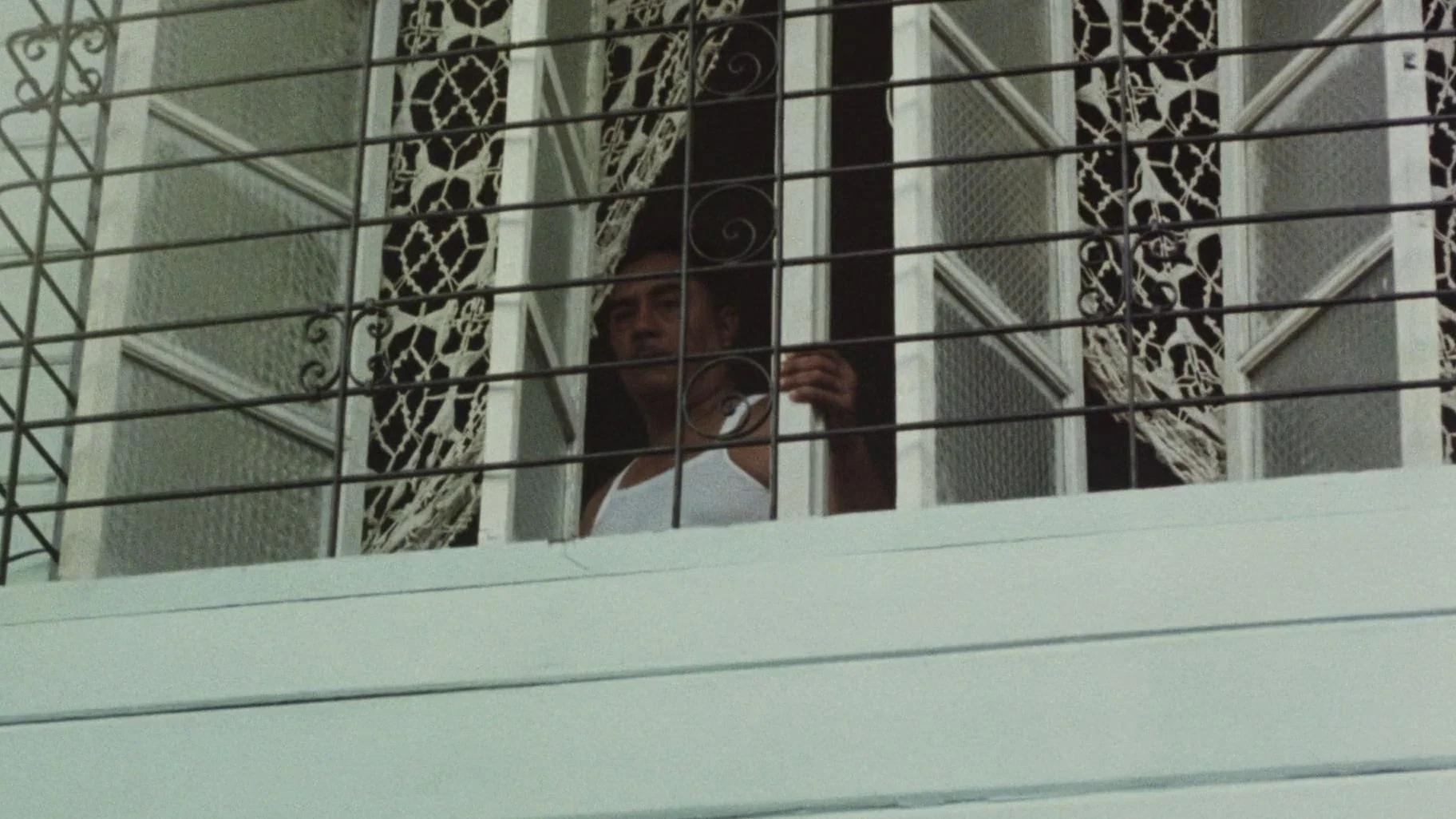
De Leon’s direction is a masterclass in the geometry of dread. Working with cinematographer Rody Lacap, the visual language of Kisapmata is profoundly, almost physically claustrophobic. The house on Zapote Street is framed less like a domestic sanctuary and more like a concrete mausoleum. Every shot feels meticulously designed to emphasize entrapment. De Leon shoots through doorways, iron grilles, and stair banisters, visually slicing the characters apart and locking them in frames within frames. Hallways feel unnervingly narrow; ceilings seem to press down on the characters' heads. The camera acts as a trapped observer, forced to bear witness to the methodical stripping of human dignity. Even when the characters venture outside, the world feels impossibly small, shadowed by the inevitable return to the house. The lighting is harsh and unforgiving, offering no romantic shadows to hide in, only the cold, sterile illumination of an interrogation room.
The auditory experience of the film mirrors its visual suffocation. There are no cheap jump scares or booming musical cues to release the tension. Instead, the horror is built through agonizing quiet—the sound of footsteps pacing upstairs, the terrifying click of a locked door, the sickening scrape of silverware against a plate during a silent, tension-choked family dinner. The film makes you painfully aware of the act of breathing, creating an atmosphere so thick with unspoken threat that you feel the urge to hold your own breath so as not to draw Dadong's attention.
Operating perfectly as both a literal domestic thriller and a macro-level allegory, Kisapmata—released during the height of the Marcos dictatorship—uses the patriarchal family unit to mercilessly dissect the anatomy of authoritarianism. Dadong is the ultimate fascist, demanding absolute love and gratitude while dispensing only paranoia and cruelty. The film ruthlessly tears down the idealized facade of the respectable Filipino family, exposing the festering rot of toxic masculinity, unchecked authority, and complicit silence beneath the polished floorboards. It suggests that tyranny does not just exist in the halls of government; it is cultivated at the dinner table.
Kisapmata translates to "In the blink of an eye," a title that serves as a grim, agonizing prophecy for the film's climax. De Leon stretches the tension until it is practically screaming, making the audience beg for some kind—any kind—of release. But when the violence finally, inevitably erupts, it is not stylized, triumphant, or cathartic. It is ugly, senseless, devastatingly abrupt, and completely devoid of meaning. It happens precisely as the title promises, leaving a deafening, ringing silence in its wake.
This is a film that does not want to entertain you with fear; it wants to traumatize you with the truth. It is a grueling endurance test of empathy, an unflinching look into the pitch-black abyss of domestic abuse that leaves you entirely depleted. Kisapmata achieves a level of pure, unadulterated psychological terror that proves the most horrifying stories are not those of monsters hiding under the bed, but of the monsters who tuck us in at night, lock the door from the inside, and whisper that they will never, ever let us go.