10/10
1/10
6/10
9.5/10
10/10
10/10
The Weight of the Soil: An Autopsy of Territorial Dread
There is a specific, primal terror in realizing that the earth beneath your feet does not want you there—that the very soil you are trying to cultivate has already made a blood pact to swallow you whole. Rodrigo Sorogoyen’s The Beasts (As Bestas)—the undisputed, suffocating crown jewel of 2022 cinema—opens with a sequence of breathtaking, violent poetry that serves as the Rosetta Stone for its entire agonizing runtime. We bear witness to the A Rapa das Bestas, an ancient Galician tradition where wild horses are corralled, wrestled to the dirt, and sheared by local men using nothing but their bare hands and sheer, crushing body weight. The camera immerses us in the claustrophobic crush of sweat, muscle, and animal panic. It is a breathtaking display of dominance and asphyxiation. And it is exactly what this film will do to you. What follows is an exhaustive, masterfully calibrated rural thriller that pins the viewer to the earth, pressing down on your chest until every cubic inch of oxygen is stripped from your lungs.
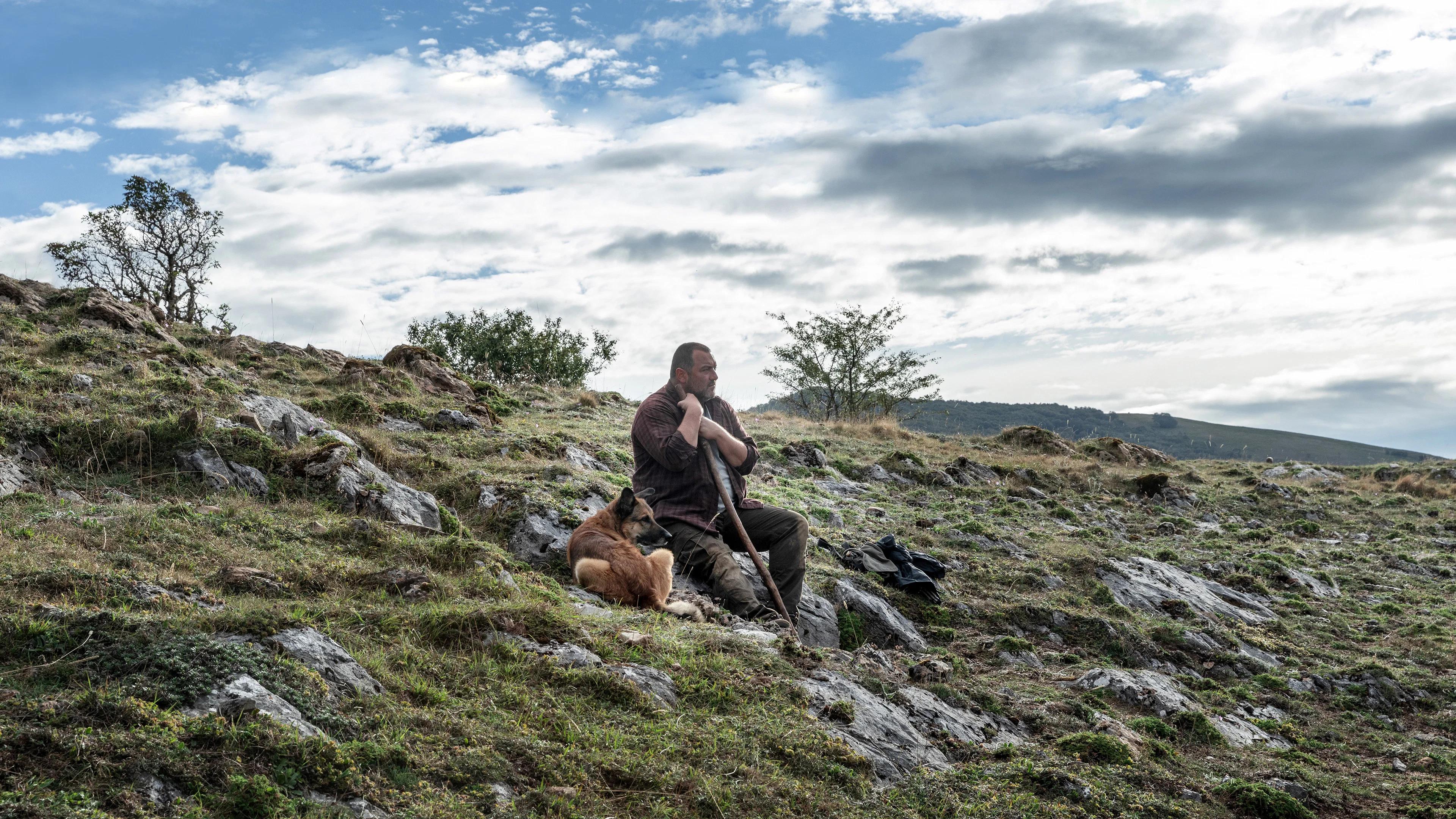
Sorogoyen trades the idyllic, postcard romanticism of the European countryside for a portrait of a society festering with bitter, calcified resentment. We are introduced to Antoine (Denis Ménochet) and Olga (Marina Foïs), an educated, bourgeois French couple who have relocated to a decaying, depopulated Spanish village to live out a dream of eco-friendly agrarian utopianism. They restore abandoned stone homes, cultivate organic tomatoes, and speak of the land with the reverent tones of tourists. But to the locals—specifically their immediate neighbors, the Anta brothers, Xan (Luis Zahera) and Lorenzo (Diego Anido)—the land is not a spiritual retreat; it is a generational prison. The inciting incident is deceivingly bureaucratic: Antoine refuses to sign a petition that would allow a Norwegian wind farm company to buy out the villagers, effectively denying the locals a meager financial escape from a lifetime of backbreaking, impoverished labor. From this single seed of administrative dissent, a campaign of psychological warfare blossoms with terrifying inevitability.
The horror of The Beasts does not lurk in shadows or rely on the supernatural. It sits across from you in broad daylight, served over a game of dominoes and cheap liquor in a dingy, fluorescent-lit village tavern. Sorogoyen understands that the most paralyzing dread stems from the slow-motion collision of immovable ideological objects. Antoine believes in logic, law, and the fundamental right to exist peacefully. His fatal flaw—his hubris—is his privilege. He fails to understand that his romanticized agrarian dream is built directly on top of the Anta brothers' waking nightmare.
The performances that anchor this tectonic conflict are nothing short of monumental. Denis Ménochet uses his hulking, bearish physical presence to project a tragic, stubborn gentleness. Antoine is a man who mistakenly believes that a civil tongue and a hidden video camera can protect him from centuries of territorial rage. Opposite him, Luis Zahera delivers what is unquestionably one of the most mesmerizing, terrifying antagonist performances of the decade. Zahera’s Xan is not a cartoon villain; he is a man eroded by the earth, smelling of manure and simmering with an entirely justified class fury that has mutated into lethal xenophobia.
The boiling point between these two men is captured in a legendary, unbroken long take set in the local bar. It is a quiet, seated conversation that somehow possesses the white-knuckle, visceral intensity of a physical bloodbath. Sorogoyen lets the camera sit unblinking as Xan weaponizes language, delivering veiled threats and airing deep-seated grievances with a smiling, rotting charm. The scene is a masterclass in atmospheric pressure; the violence is purely conversational, yet you can feel the air in the room turning to lead. It is psychological horror stripped down to its barest, most effective elements. Flanking Xan is his brother Lorenzo (Diego Anido), who operates with the unpredictable, feral danger of a damaged junkyard dog. When the brothers escalate their tactics—leaving batteries in the French couple's well, poisoning their meticulously grown crops, tailing Antoine's vehicle on deserted mountain roads—the harassment is deeply intimate and terrifyingly banal.
Cinematographer Alejandro de Pablo is essential to the film's suffocating anatomy. He shoots the vast, sweeping Galician landscapes not as spaces of liberation, but as a vast, green penitentiary. The lush forests and rolling hills quickly transform into an encroaching, hostile wilderness. When Antoine walks through the woods, the trees feel like prison bars. De Pablo frequently utilizes low angles and unnervingly tight framing, forcing us to feel the damp cold of the stone houses and smell the sweat of creeping desperation. This visual claustrophobia is elevated to an agonizing degree by Olivier Arson’s remarkable, percussive score. Utilizing guttural rhythms and sharp, atonal strikes, the music mimics a racing heartbeat or the distant, thundering hooves of wild horses, dropping in at precise, excruciating moments to twist the knife in the viewer’s gut.
However, what elevates The Beasts from a brilliant, nerve-shredding thriller into an all-time cinematic masterpiece is its structural audacity. Without directly betraying the film's devastating narrative trajectory, it must be anatomized how Sorogoyen executes a masterful, breathtaking pivot in the film's latter half. The masculine, territorial aggression that dominates the first two acts—the chest-puffing, the barroom standoffs, the implicit threat of physical violence—gives way to an entirely different kind of endurance.
The film shifts its weight entirely onto the shoulders of Marina Foïs’s Olga. In doing so, The Beasts mutates from a thriller about the violence of men into a profound, harrowing meditation on grief, resilience, and the stubborn, terrifying power of feminine resolve. Foïs grounds the movie with a quiet, steely brilliance that contrasts sharply with the testosterone-fueled warfare that preceded it. The climax of the film’s thematic weight is delivered not in a physical altercation, but in a blistering, emotionally shattering kitchen argument between Olga and her visiting daughter, Marie (Marie Colomb). It is here that the film fully exposes its bleeding heart, exploring the chasm between those who flee from trauma and those who refuse to be uprooted by it. Olga embodies the terrifying realization that sometimes, the ultimate, most destructive act of defiance a person can muster is simply refusing to move.
The Beasts is an exhaustive, unsparing dissection of xenophobia, class divide, and the inescapable weight of the soil we choose to bleed on. Sorogoyen has crafted an atmospheric pressure cooker that demands immense patience, only to reward it with a narrative experience that is as bruising, exhausting, and unforgettable as the wrestling of a wild animal. It is a film that performs a live autopsy on the festering wounds of rural isolation, leaving the viewer entirely depleted, heartbroken, and completely in awe of its ferocious, unyielding power.