9.5/10
1/10
8.5/10
10/10
9.5/10
10/10
The Terrarium of Polite Fascism: Building a Prison Out of Vocabulary
There is a distinct, nauseating brand of horror that exists exclusively under the blinding light of a cloudless suburban afternoon. It is the horror of total, clinical control. With Dogtooth, Greek auteur Yorgos Lanthimos does not just present a dysfunctional family; he constructs a meticulously sanitized, hermetically sealed cult of three, ruled by a patriarch who understands that true, inescapable imprisonment does not require iron bars or chains. It requires the absolute monopoly of reality itself. Dogtooth is a masterpiece of psychological asphyxiation, a film that peels back the idyllic veneer of the nuclear family to reveal a terrifying, fascist terrarium. It is a cinematic endurance test that leaves you feeling profoundly unclean, desperate to break a window just to prove that the outside world still exists.
The premise is an exercise in escalating dread: a Father and Mother keep their three adult children—a son and two daughters—entirely confined within the high, ivy-covered walls of their sprawling estate. They have never left. They have no names. But the most impenetrable walls in Dogtooth are not made of brick; they are built entirely out of vocabulary. Lanthimos and co-writer Efthymis Filippou weaponize language, demonstrating how dictating the definition of words is the ultimate form of psychological violence. The children are taught that a "zombie" is a small yellow flower. A "sea" is a leather armchair. "Excursion" is a highly durable flooring material. By castrating their language, the parents ensure the children lack the cognitive tools to even conceptualize freedom. It is a linguistic lobotomy that proves far more horrifying than any physical torture could ever be.
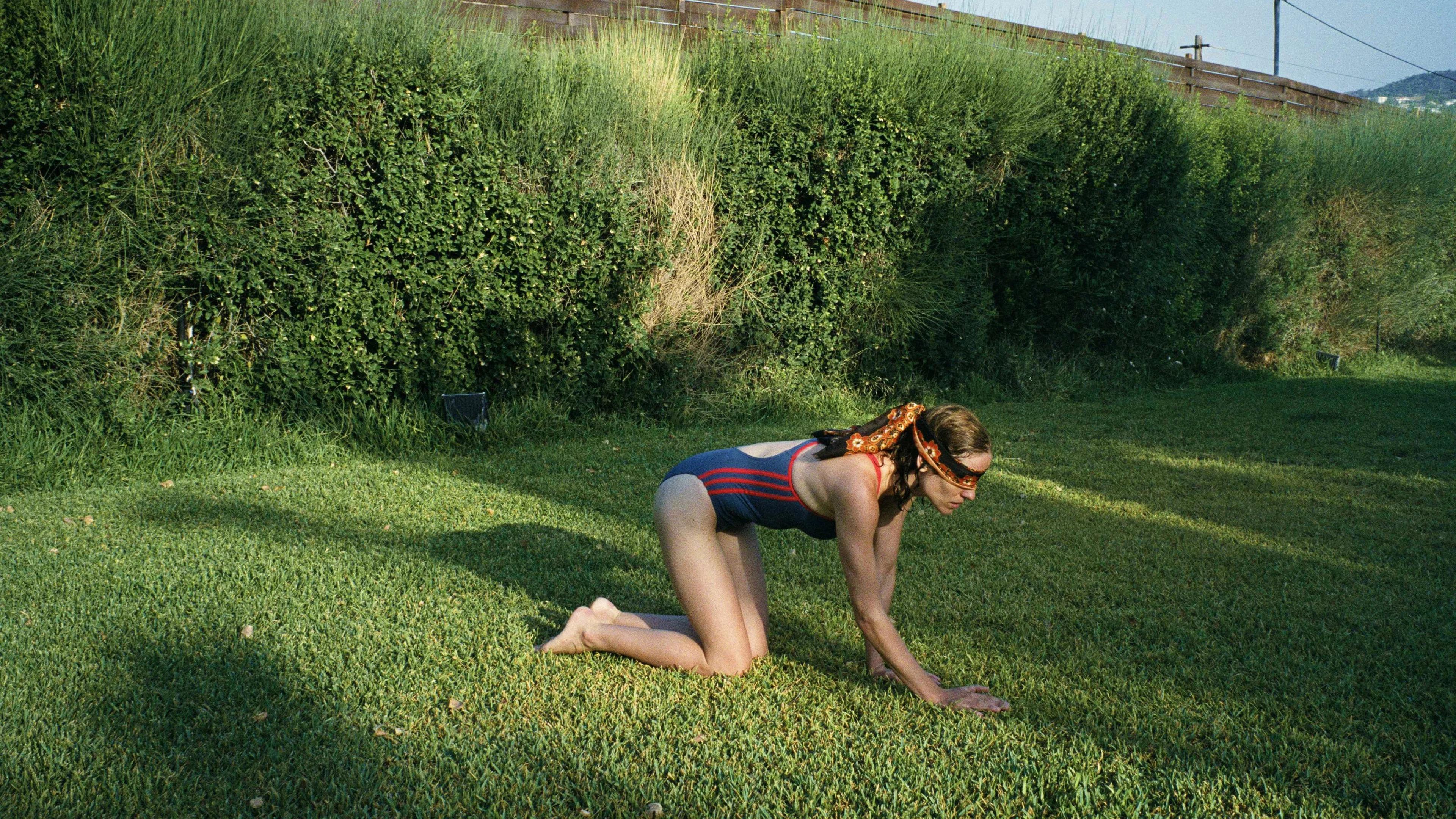
Christos Stergioglou plays the Father not as a raving, abusive monster, but as a chillingly calm, bureaucratic architect of domestic terror. He is the sole provider, the only one permitted to drive an automobile into the "dangerous" outside world. He fabricates threats to maintain order, convincing his children that domestic cats are bloodthirsty apex predators that devoured their non-existent brother. Stergioglou’s performance is terrifying precisely because of his utter, sociopathic banality. He believes his own righteous delusion—that he is protecting his flock from the rot of society—while casually orchestrating non-consensual sexual encounters for his son by blindfolding and smuggling in a security guard named Christina (Anna Kalaitzidou). He is playing God in a backyard swimming pool, and the sheer audacity of his control makes your stomach turn.
The performances of the captive children—Angeliki Papoulia (Eldest), Mary Tsoni (Youngest), and Christos Passalis (Son)—are nothing short of miraculous. Lanthimos directs them to deliver a brilliant, deadpan stiltedness, capturing the tragic absurdity of bodies that have aged into adulthood while their minds have been forcibly arrested in toddlerhood. They play infantile games to see who can hold their breath the longest underwater; they perform jagged, alien dance routines; they engage in sudden, shocking bursts of animalistic violence over minor infractions. The horror lies in their total lack of social conditioning. Because they do not understand the boundaries of their own bodies, the film is laced with deeply disturbing, awkwardly blunt sexuality and casual incestuous undertones. It is like watching a nature documentary about a species of human that evolved in a vacuum, completely devoid of empathy or context.
Visually, Dogtooth is a masterclass in clinical detachment. Lanthimos and cinematographer Thimios Bakatakis shoot the sprawling, sun-drenched estate with the cold, objective eye of a security camera. The framing is intentionally suffocating; heads are frequently lopped off by the top of the frame, bodies are pushed into the corners, and the camera remains agonizingly static. The bright, sterile lighting offers no shadows for the characters to hide in. Everything is exposed, yet nothing is understood. The pristine blue of the swimming pool and the lush green of the manicured lawn become symbols of a sterile nightmare. The film proves that you don't need a haunted, rotting Gothic mansion to create absolute terror—a well-funded, pristine suburban home can be the most terrifying haunted house on earth, provided the ghosts are still alive and breathing.
The catalyst for the film’s agonizing final act is the introduction of contraband: not drugs or weapons, but pop culture. Christina, acting as a disruptive outside agent, trades a pair of glowing headbands for VHS tapes. The infection of outside media into the eldest daughter's pristine, brainwashed mind is catastrophic. Watching Papoulia’s character slowly internalize the dialogue of American cinema, adopting lines from movies as her own internal monologue, is both darkly hilarious and profoundly tragic. It is the spark of rebellion in a vacuum, a sudden realization that there is a syntax beyond the borders of the front lawn.
This conceptual awakening forces a brutal collision with the titular myth of the "dogtooth." The parents have always promised the children they are only ready to leave the house when their right dogtooth falls out—an impossible biological threshold designed to ensure permanent captivity. When the eldest daughter finally decides to challenge her confinement, the film forces us to witness the sickening, visceral extremes a prisoner will go to in order to meet the fabricated rules of their captor. The resulting violence is not an act of madness; within the twisted, insular logic of the household, it is a completely rational graduation.
The climax of Dogtooth is a masterstroke of lingering, suffocating ambiguity. Lanthimos refuses to offer the catharsis of a clean escape or a triumphant victory over the patriarchal warden. Instead, he traps the audience in an oppressive, breathless silence, leaving us to stare into the dark and wonder what happens when a creature raised in a vacuum finally throws itself toward the unknown. We are left to ponder the terrifying reality that even if physical boundaries are breached, the psychological architecture of the prison remains intact. Dogtooth is a harrowing, flawless anatomy of authoritarianism that leaves your throat parched and your worldview fractured. It is an exhaustive exploration of human malleability, a terrifying reminder that reality is only what we are taught, and that love, when twisted into the shape of absolute control, is the most destructive force on the planet.