"The body of Laura Palmer is washed up on a beach near the small Washington state town of Twin Peaks. FBI Special Agent Dale Cooper is called in to investigate her strange demise only to uncover a web of mystery that ultimately leads him deep into the heart of the surrounding woodland and his very own soul."
10/10
4/10
7/10
10/10
10/10
10/10
A Monument of Surrealist Terror
There are works of art that redefine their medium, and then there is Twin Peaks. To speak of David Lynch and Mark Frost’s sprawling, decades-spanning television epic is to speak of a monumental achievement that has never been topped, and in all likelihood, never will be. The landscape of visual storytelling is permanently fractured into two distinct eras: Before Twin Peaks, and After. It stands as an absolute 10/10 masterpiece, a towering giant of surrealist horror and emotional devastation that rewrote the boundaries of what could be projected onto a screen. It is an exhaustive exploration of the human soul, charting the terrifying expanse between the idyllic facade of a Pacific Northwest logging town and the cosmic, unfathomable darkness lurking in the woods just beyond the porch light.
The premise is universally recognized—a homecoming queen wrapped in plastic, washing up on a rocky shore—but the true genius of Twin Peaks lies in how it uses the framework of a conventional murder mystery to pull the viewer into an abyss of existential dread. Lynch constructs a world where the mundane and the metaphysical are hopelessly entangled. A ceiling fan, a dripping faucet, a cup of damn fine coffee, and the wind howling through the Douglas firs are imbued with the same terrifying, mythic weight as extradimensional entities and backwards-talking spirits. It is a world where grief is so profound, so violently palpable, that it literally summons demons from the ether.
David Lynch continues to prove, frame by frame, that he is simply the best at what he does. His unparalleled mastery of the surreal is not an exercise in random weirdness; it is a direct pipeline to the subconscious. But perhaps his most miraculous, enduring triumph in Twin Peaks is his ability to bring out the absolute best in every single actor placed in front of his lens. Lynch does not just direct performances; he channels raw, unfiltered human extremity.
Sheryl Lee’s portrayal of Laura Palmer—particularly in the devastating prequel film Fire Walk With Me and the staggering third season, The Return—is the bleeding, screaming heart of the entire mythos. She is tasked with playing a phantom, a victim, a savior, and a damned soul, delivering a performance of such transcendent, agonizing terror that it transcends acting and becomes a spiritual exorcism. Ray Wise as Leland Palmer captures the suffocating duality of a man torn between unimaginable sorrow and the horrifying entity possessing him, shifting from manic, grieving father to grinning predator with a fluidity that freezes the blood. Grace Zabriskie’s primal, guttural wails upon learning of her daughter's death remain the most terrifyingly accurate depiction of pure, unadulterated grief ever captured on film. And anchoring the madness is Kyle MacLachlan as Special Agent Dale Cooper, projecting an aura of Boy Scout purity that slowly, tragically fractures as he wades deeper into a darkness that even his boundless optimism cannot illuminate.
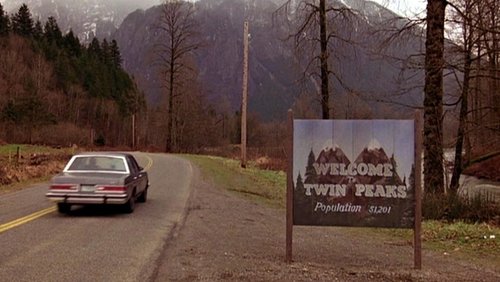
Apr 8, 1990
The small northwest town of Twin Peaks, Washington is shaken up when the body of the Homecoming Queen, Laura Palmer, is discovered washed up on a riverbank, wrapped in plastic.
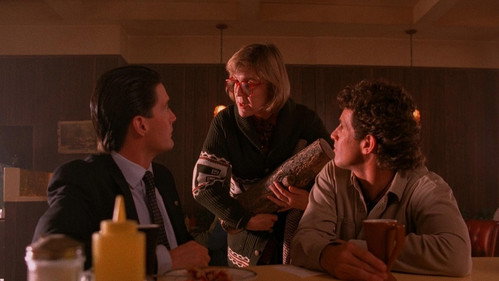
Apr 12, 1990
Agent Dale Cooper and Sheriff Harry Truman discover more about the troubled secret life of the murdered Laura Palmer.
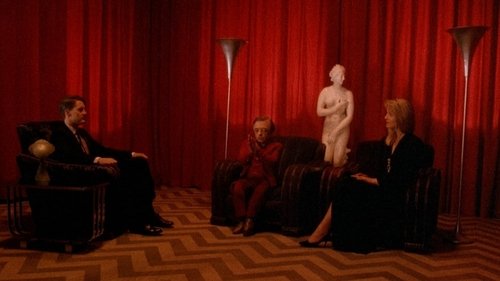
Apr 19, 1990
Agent Cooper demonstrates an unusual deductive technique for the Twin Peaks Sheriff's Department.
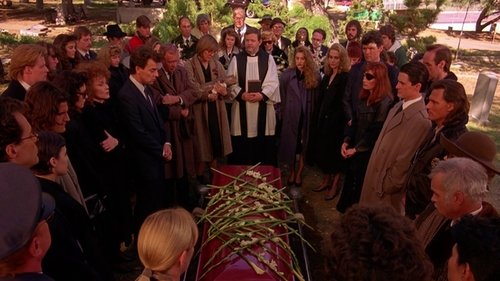
Apr 26, 1990
The people of Twin Peaks gather together to attend the funeral of Laura Palmer.
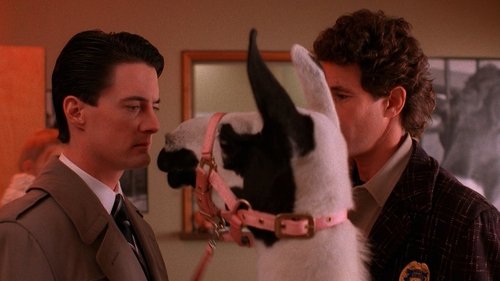
May 3, 1990
Cooper and Truman try to find The One-Armed Man.

May 10, 1990
Cooper and Truman discover a crime scene in the woods.
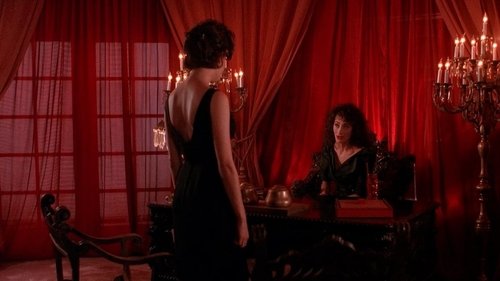
May 17, 1990
Dr. Jacoby gets a phone call from Laura Palmer.
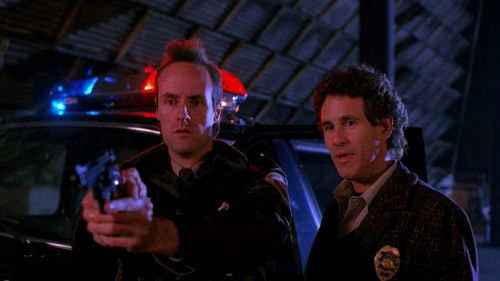
May 23, 1990
The investigation of Laura Palmer's murder reaches a terrifying conclusion.
The horror of Twin Peaks is profoundly invasive. Lynch understands that the most terrifying space in the world is not a haunted castle, but the American living room. The entity known as BOB (Frank Silva) remains one of the most frightening creations in the history of the horror genre precisely because he invades the most intimate spaces. He crouches at the foot of the bed; he stares back from the living room mirror. He is the personification of domestic abuse, incest, and inherited trauma, a cosmic parasite feeding on the "garmonbozia" (pain and sorrow) generated by human suffering. When the show introduces the Red Room—the waiting room of the Black Lodge—it delivers a masterclass in surrealist dread. The zigzag floors, the blood-red drapes, the strobe lights, and the stilted, reverse-recorded dialogue create an atmosphere of profound disorientation. You are no longer watching a television show; you have been pulled into a nightmare from which you cannot wake.
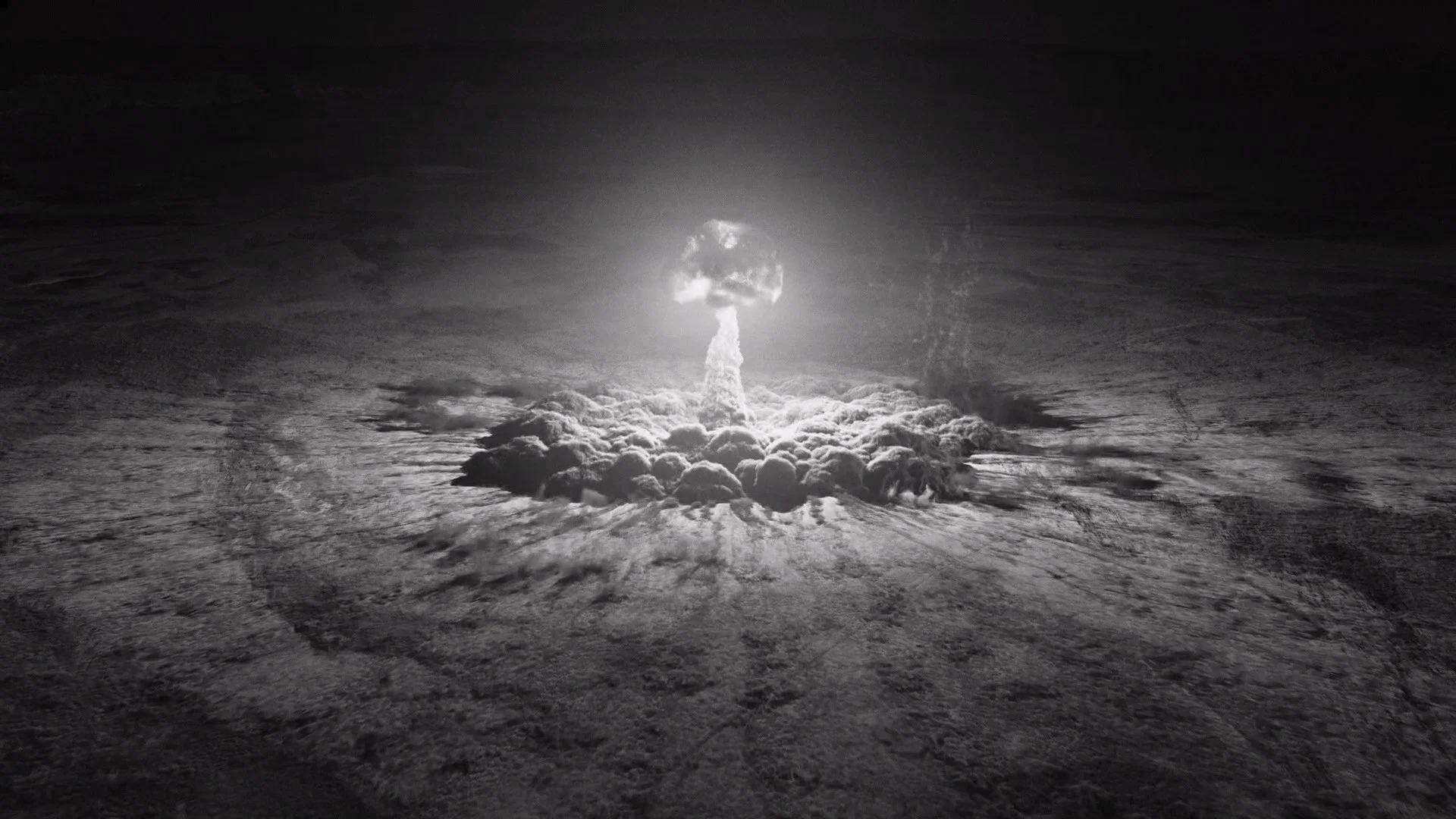
To fully grasp the magnitude of this giant, one must view it in its entirety, culminating in the 2017 limited series The Return. If the original run shattered the rules of television, The Return pulverized the pieces and scattered them into the void. It is a grueling, visionary avant-garde masterpiece that refuses to rely on nostalgia. Part 8 of The Return—a terrifying, abstract origin story of the universe's ultimate evil, birthed in the nuclear fire of the Trinity test—stands as perhaps the greatest, most disturbing hour of television ever broadcast. It is pure, unadulterated Lynch, utilizing terrifying imagery, abrasive soundscapes, and soot-covered woodsmen to craft an apocalyptic poem of dread.
The emotional and psychological weight of the series is permanently tethered to the late Angelo Badalamenti’s legendary score. The music is the lifeblood of the town, transitioning seamlessly from soapy, jazz-inflected melancholia to low, droning synthesizers that sound like the earth itself cracking open. The audio design—the crackle of raw electricity, the ominous hum of a hospital corridor, the needle skipping on a record player—works in tandem with the visuals to maintain a state of perpetual, low-level anxiety.
Twin Peaks is a beautiful, horrifying, deeply compassionate exploration of the battle between light and dark. It is a testament to the power of art to disturb, to provoke, and to move us to the core. It proves that true horror is not just about jump scares; it is about the agonizing mystery of human existence, the secrets we hide behind closed doors, and the shadows that dance in the corners of our minds. It is a monumental achievement that stands alone at the summit of visual storytelling. David Lynch is truly the greatest to ever do it, and Twin Peaks is his untamable, immortal masterpiece.