10/10
2/10
7.5/10
10/10
10/10
10/10
The Thirst That Consumes: Australia as Beautiful Hell
Ted Kotcheff's Wake in Fright doesn't announce itself as horror—it presents as social drama, as character study, as slice of Australian outback life—yet it achieves something more genuinely horrifying than most films explicitly designed to terrify. This is horror that seeps through your skin like the relentless Australian heat, that parches your throat and clouds your judgment until you're no longer sure who you were before the nightmare began. You don't watch Wake in Fright; you endure it, emerging on the other side feeling physically and psychologically wrung out, dehydrated not just literally but spiritually. It's a masterpiece of atmospheric dread and psychological disintegration that proves horror doesn't require supernatural elements or explicit genre markers—sometimes the most terrifying thing is watching a man lose himself in the Australian outback over five days of enforced hospitality and endless beer.
The film follows John Grant, a schoolteacher bonded to work in a remote outback town, who stops for one night in the mining town of Bundanyabba (the Yabba) on his way to Sydney for Christmas holiday. What should be a brief layover becomes a nightmarish descent as the town's aggressive hospitality, gambling fever, and alcoholic culture trap him in a cycle of degradation from which escape seems increasingly impossible. This is folk horror without the folklore, rural dread without the supernatural—just human beings and the environment they've created, which proves more than sufficient to destroy a man.
Donald Pleasence delivers one of cinema's greatest performances as Doc Tydon, an alcoholic doctor whose cultured accent and philosophical bent can't disguise the profound decay beneath. Pleasence creates a character who represents both warning and prophecy—what John Grant is becoming, what the outback does to men who stay too long. Watch how Pleasence uses his eyes, perpetually bloodshot and swimming with alcohol yet retaining flashes of the intelligence that once defined him. It's a performance of devastating authenticity, made more unsettling by how likeable Doc remains even as he facilitates John's destruction.
Gary Bond as John Grant gives a performance of remarkable courage and commitment, allowing his character to be systematically stripped of dignity, composure, and self-identity. Bond makes John's deterioration feel absolutely real—the gradual loosening of inhibitions, the acceptance of behaviors he would have found repellent days earlier, the final complete breakdown. The performance works because Bond never protects John or makes him sympathetic; instead, he shows us a weak man discovering just how weak he actually is.
The supporting cast populates the Yabba with characters who feel absolutely authentic—not caricatures of Australian masculinity but recognizable human beings whose particular brand of aggressive friendliness becomes weaponized through sheer relentlessness. Chips Rafferty, Sylvia Kay, Jack Thompson, and the entire ensemble create a community that feels both welcoming and absolutely inescapable, their kindness indistinguishable from cruelty.
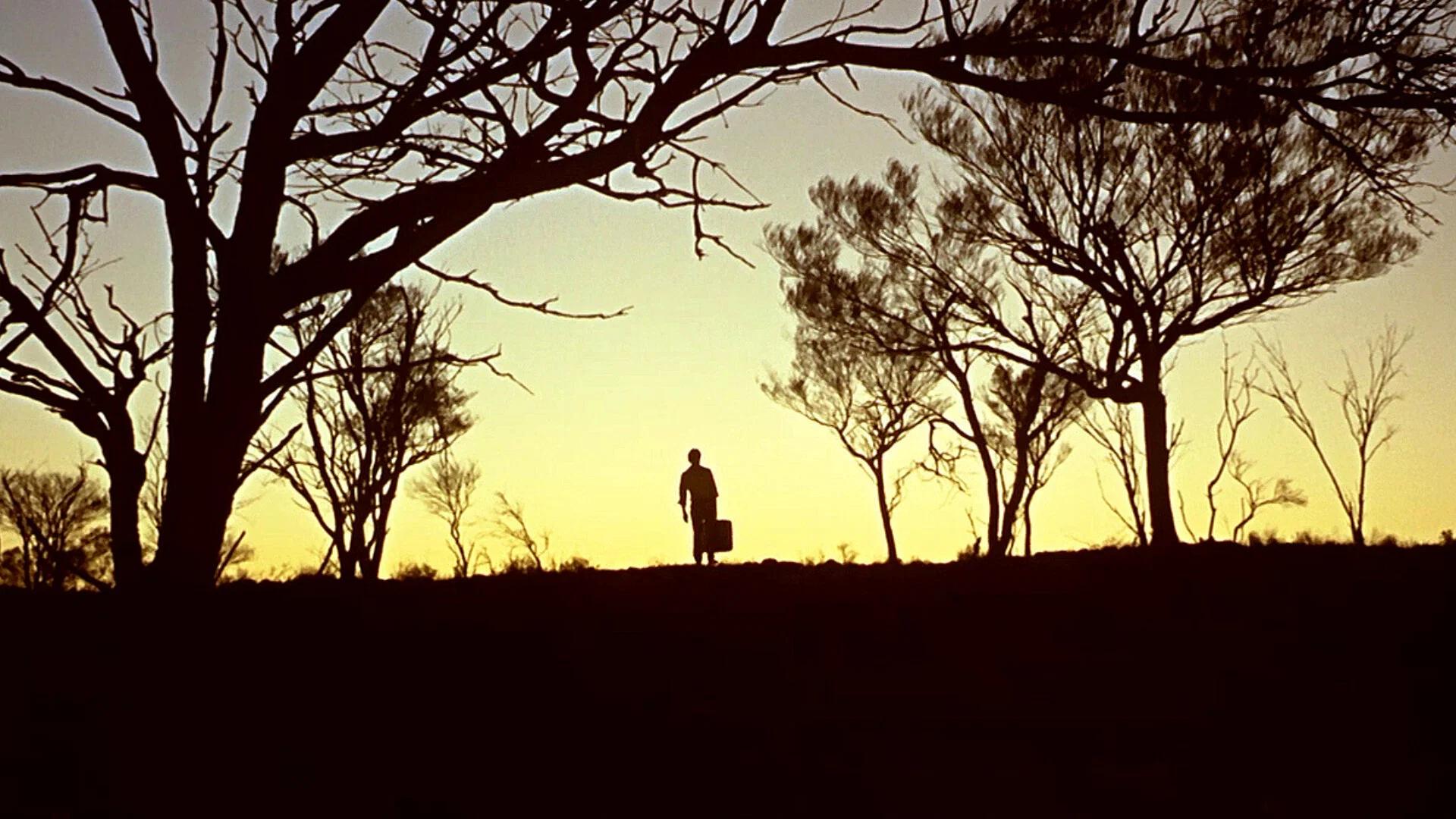
Kotcheff's visual language, working with cinematographer Brian West, creates images of such harsh beauty that they become oppressive. The outback is shot in blazing sunlight that feels like physical assault, the landscape rendered in bleached colors that suggest a place where life barely maintains its grip. The interior spaces—the pub, Doc's house, the various locations of John's degradation—feel claustrophobic despite their size, as if the heat and alcohol have made the air itself thick and unbreathable.
The famous opening shot—a 360-degree pan of absolute emptiness—establishes the outback as void rather than landscape, a place defined by absence rather than presence. This becomes crucial to understanding the film's horror: there's nowhere to hide, nowhere to escape to, just endless empty space that somehow makes entrapment feel absolute.
The production design creates environments that feel authentically lived-in and sweat-stained. Every surface looks like it's been coated with dust and beer, every piece of furniture seems to have absorbed decades of spilled alcohol and cigarette smoke. The Yabba feels real in ways that make the nightmare more inescapable—this isn't stylized hell but actual place that exists and continues to exist.
John Scott's score uses jarring, dissonant sounds that mirror John's psychological state—the music becomes increasingly fractured and nightmarish as his grip on reality loosens. The sound design emphasizes the constant drone of flies, the oppressive heat made audible, the endless clinking of beer bottles that becomes percussive assault. The film makes you feel the physical environment through audio as much as visuals.
The famous kangaroo hunt sequence represents one of cinema's most disturbing passages, using actual documentary footage of a real hunt that makes the sequence almost unwatchably brutal. The violence isn't aestheticized or made palatable—it's raw, chaotic, and genuinely sickening. This sequence crystallizes the film's horror: the revelation that beneath civilized veneer lies something savage and destructive, and that John has become part of it rather than observer to it.
Wake in Fright's exploration of masculine culture and enforced camaraderie feels urgently prescient. The film understands how social bonds can become forms of control, how hospitality can be weaponized, how the inability to refuse another drink becomes slow-motion suicide. The Yabba's residents aren't villains—they're genuinely friendly and generous by their own lights—which makes their role in John's destruction more disturbing than any malicious intent could achieve.
The film's treatment of alcohol deserves particular recognition for its unflinching honesty. The endless beer consumption isn't romanticized or made to seem fun; instead, we watch it systematically destroy judgment, health, and dignity. The film makes alcohol feel like environmental hazard as deadly as the heat, another element of the outback designed to break men down.
Kotcheff's direction maintains absolute control throughout, never allowing the film to tip into exploitation or moral judgment. He presents John's descent with documentary-like objectivity, trusting audiences to understand the horror without needing it explicitly spelled out. The pacing reflects the experience of drunkenness itself—time becomes elastic, events blur together, cause and effect become confused.
The film's sexual content—John's encounter with Janette, the suggestion of something happening with Doc—is handled with remarkable sophistication, suggesting how alcohol and heat and male bonding can dissolve normal boundaries without making these transgressions feel cheap or exploitative. The film understands that sexual confusion and boundary violation become part of the overall disintegration.
The famous ending, with John waking up in hospital having survived his suicide attempt and being returned to his teaching post, provides one of cinema's most devastating conclusions. The implication that nothing has fundamentally changed, that John will continue this cycle, that the outback has claimed him even if he physically survives—it's more horrifying than any explicit bad ending could achieve. The final shots mirror the opening, suggesting eternal recurrence, nightmare as permanent condition.
Wake in Fright's near-total disappearance for decades (before being restored in 2009) and subsequent rediscovery represents one of cinema history's great second acts. That the film was initially dismissed or ignored speaks to how ahead of its time it was, how little audiences were prepared for horror this psychologically authentic and socially critical.
The film's influence on Australian cinema is profound, establishing the outback as space of psychological rather than physical threat, proving that horror could emerge from social dynamics and environmental pressure rather than explicit supernatural elements. Everything from The Cars That Ate Paris to Mad Max to contemporary outback horror owes a debt to Wake in Fright's demonstration that Australia itself could be horror setting.
The technical execution is flawless throughout, with every element—cinematography, sound, editing, production design—serving the film's vision of psychological disintegration and environmental oppression. The film achieves documentary realism while maintaining artistic control, a balance that few films manage.
What makes Wake in Fright transcendent is its absolute authenticity—nothing feels false or staged, even as the narrative spirals into nightmare. The film captures something true about how quickly civilized behavior can dissolve under the right conditions, how environment and social pressure can unmake a person without requiring supernatural intervention.
Wake in Fright stands as one of cinema's supreme achievements in psychological horror, a film that doesn't need genre markers to achieve genuine terror. It proves that the most effective horror often comes from recognizable human experience pushed to extremes, from watching someone lose themselves not to demons or monsters but to heat, alcohol, and the relentless friendliness of people who won't let you leave.
This is cinema as endurance test, as warning, as unflinching examination of how thin the veneer of civilization really is. You emerge from Wake in Fright genuinely dehydrated—physically, emotionally, spiritually wrung out by a film that makes you feel every drop of spilled beer, every degree of oppressive heat, every moment of John Grant's descent into the abyss. It's not just one of the best films at what it does—it's the definitive film of its particular brand of horror, an absolute masterpiece that proves genre boundaries mean nothing when craft and vision align this perfectly. An Australian nightmare that feels more genuinely terrifying than a thousand supernatural thrillers.