8.5/10
1/10
9.5/10
9.5/10
10/10
10/10
The Metal and the Marrow: Finding Grace in the Wreckage
There is a rare, transcendent echelon of cinema that completely defies the intellectual urge to micro-analyze. These are the films that disable the logical, calculating centers of the brain and plunge straight into the deepest, most uncharted territories of the soul. Julia Ducournau’s Palme d'Or-winning masterpiece, Titane, is the undisputed zenith of this phenomenon. It is a cinematic miracle operating in a space entirely its own, oscillating wildly between the ethereal and the violently visceral. It is a film that presents you with bat-shit, transgressive insanity, only to carefully peel back its chrome and blood-soaked layers to reveal a beating, achingly tender heart. You do not merely comprehend this film; you physically endure and emotionally absorb it as an abstract, sensory blur.
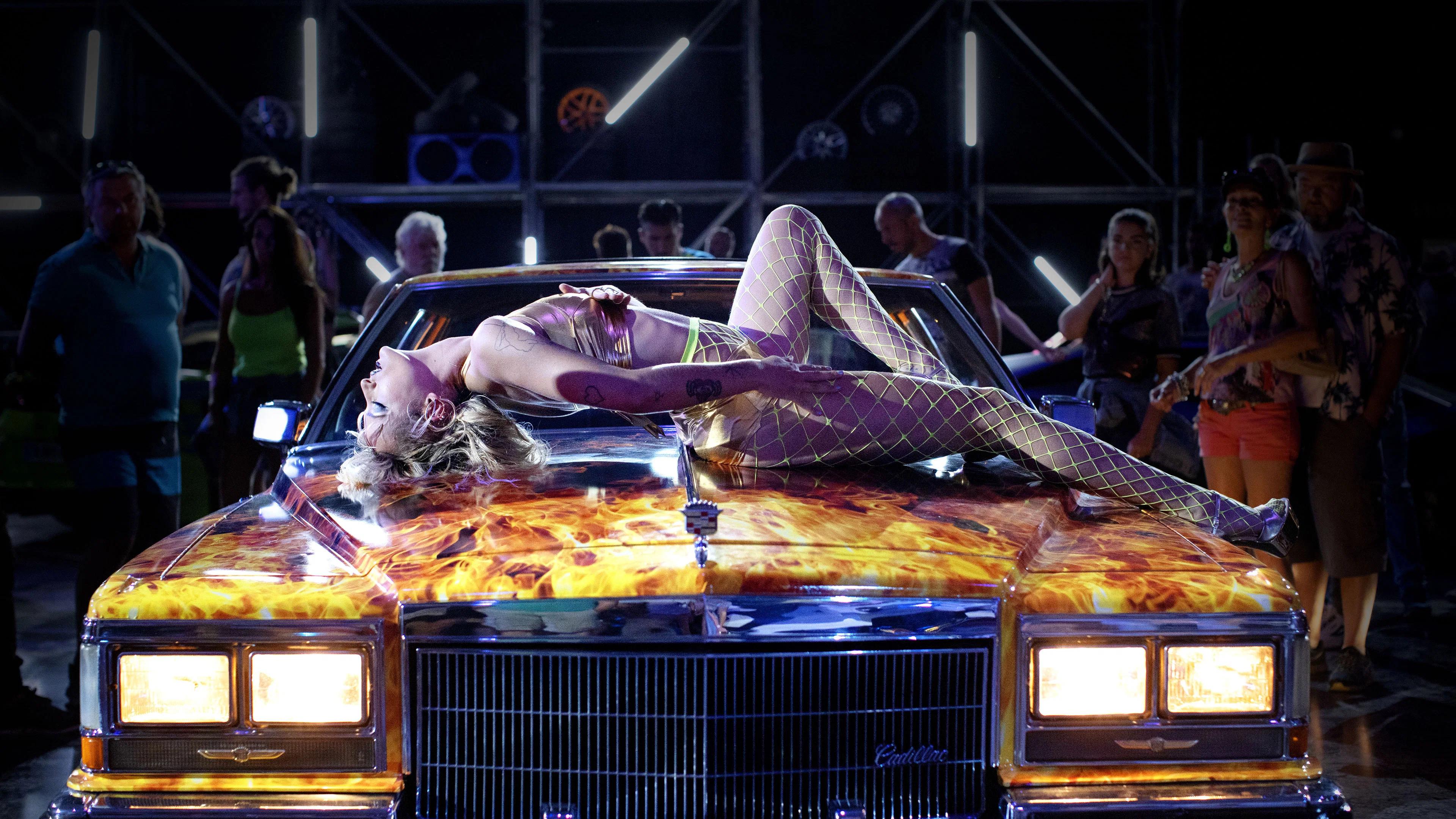
The film introduces us to Alexia (Agathe Rousselle), an erotic dancer at underground car shows who bears a massive, horseshoe-shaped titanium plate in her skull following a childhood accident. Alexia is less a traditional protagonist and more a feral, instinctual force of nature. In the film's frenetic, chaotic first act, Ducournau bombards us with a cocktail of neon-drenched violence and automotive psychosexuality. It is confrontational, aggressive, and proudly unhinged. Yet, this initial onslaught of extreme body horror is not mere provocation; it is the violent, necessary crucible required to burn away Alexia's humanity, forcing her onto the run and into a profound, terrifying physical and spiritual metamorphosis.
Driven into a corner, Alexia undergoes a brutal, self-inflicted erasure of her own identity, drastically altering her appearance to hide in plain sight. In this desperate state, she crosses paths with Vincent (Vincent Lindon), an aging, steroid-abusing fire captain who has spent years drowning in the grief of a missing son. It is here that Titane performs an impossible act of alchemy. What begins as a cold, metallic nightmare seamlessly morphs into one of the most profoundly moving explorations of found family ever put to film.
Agathe Rousselle, in her feature debut, delivers a performance of staggering, largely wordless physicality. Beneath her bruised, altered facade, she portrays a creature in perpetual, agonizing pain, her body fundamentally rebelling against her in unimaginable, impossible ways. But it is Vincent Lindon who provides the colossal, tragic emotional gravity of the film. Vincent is a man so entirely hollowed out by sorrow and the terrifying erosion of his own aging body that he accepts this silent, battered stranger into his life with a desperate, crushing intensity. The brilliance of Titane is how it navigates their dynamic. The objective truth of who Alexia is completely ceases to matter. Their mutual delusion becomes a profound survival mechanism. They are two broken, desperately lonely entities who find an unconditional, pure acceptance in one another's wreckage.
Ducournau and her cinematographer, Ruben Impens, ensure that this journey is beautifully shot from its frantic beginning to its breathless end. The visual language is breathtaking, contrasting the cold, sterile pinks and blues of the underground car shows with the warm, suffocating golden hues of the firehouse. The camera treats the human body with both reverence and revulsion, lingering on the tactile textures of scarred skin, cold steel, and sweat. Every frame is a painting of industrial decay and biological mutation. The soundtrack is equally intoxicating, washing over the imagery to create an atmosphere that feels entirely dreamlike.
As the film races toward its climactic, harrowing crescendo, you realize that you have completely stopped trying to untangle the bizarre mechanics of its supernatural elements or the logistics of the outside world. The narrative logic blurs into insignificance, eclipsed entirely by the sheer, overwhelming emotional resonance of the two leads. Ducournau uses the most extreme, grotesque elements of the body horror genre not to disgust us, but to test the absolute limits of empathy and love.
Titane is an exhaustively brutal, staggeringly beautiful piece of art. It is a film that clings to you from the opening frame and never leaves your side, burrowing into your subconscious and refusing to let go. It proves that within the darkest, most twisted corners of genre cinema—amongst the shattered bone, the tearing flesh, and the cold metal—we can find the most profound, ethereal expressions of human grace. It is a masterpiece that does not ask to be understood; it only asks to be felt.