9.5/10
1/10
6/10
10/10
9.5/10
10/10
The Architecture of a Downward Spiral: A Monster in a Tailored Suit
While it may not traffic in the traditional supernatural markers of the horror genre, Edmund Goulding’s 1947 masterpiece, Nightmare Alley, operates on a frequency of pure, existential terror. Long before the term "psychological thriller" became a marketing buzzword, this film carved out an entirely original, fiercely uncompromising space in American cinema. It is a bleak, brutal, and profoundly cynical examination of hubris and the dark, rotting underbelly of the American dream. The horror here is not found in a haunted house or a masked killer; it is found in the terrifying, inescapable gravity of a man’s own corrupt nature. It is a film that grabs you by the collar in its opening moments and pulls you down into a slow, suffocating spiral of moral degradation from which there is absolutely no return.
The narrative introduces us to Stanton Carlisle (Tyrone Power), an ambitious, silver-tongued carnival barker who views everyone around him as either a mark or a stepping stone. The carnival itself is rendered with a tactile, grimy authenticity—a purgatory of sawdust, cheap canvas, and desperate people. It is here that Stan becomes morbidly fixated on the "geek," a shattered alcoholic reduced to biting the heads off live chickens for the amusement of gawking rubes. "How does a guy get so low?" Stan asks, staring into the pit. It is the defining question of the film, and the narrative meticulously, ruthlessly spends its entire runtime answering it.
Tyrone Power’s performance is a staggering act of subversion. As one of the era’s biggest romantic leading men, Power weaponizes his devastating good looks and natural charisma, turning them into tools of predation. Stan is a hollow vessel of naked ambition. We watch him manipulate the aging, alcoholic mentalist Zeena (Joan Blondell) to steal her coded mind-reading act, only to discard her and run off with the innocent Molly (Coleen Gray) to reinvent himself for the high-society elite. Power plays Stan with a terrifying, sociopathic smoothness. He sells hope to the grieving and the desperate, presenting himself as a spiritual conduit to the dead. The film masterfully demonstrates that the most dangerous monsters do not lurk in the shadows; they wear tailored tuxedos, hold your hand, and tell you exactly what your broken heart wants to hear.
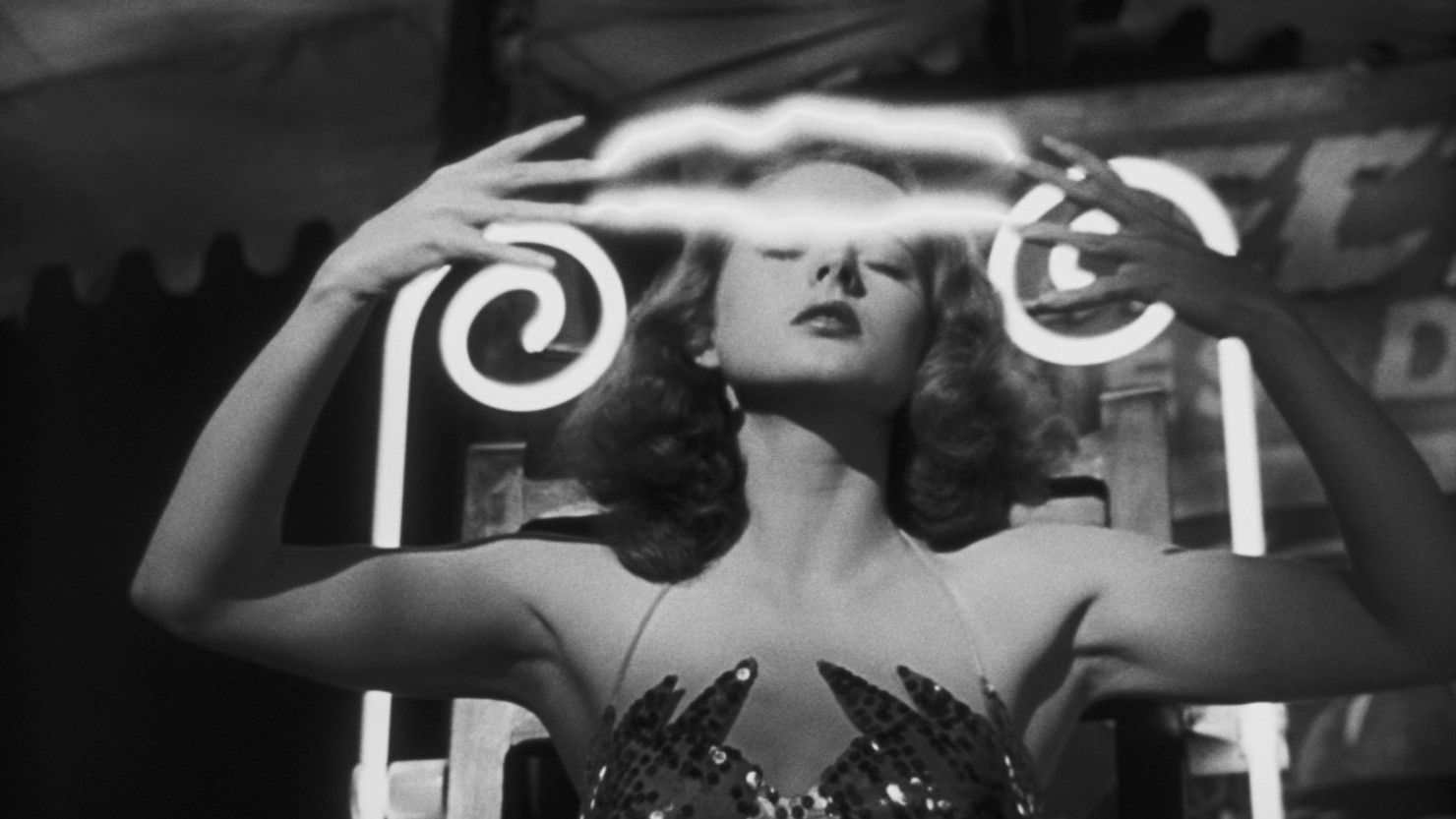
However, the film’s psychological brutality truly peaks with the introduction of Dr. Lilith Ritter (Helen Walker). If Stan is a cunning predator of the vulnerable, Lilith is the apex predator waiting for him in the concrete jungle. A corrupt, icy psychologist who secretly records the confessions of her wealthy patients, she recognizes the sociopathy in Stan because she shares it. The dynamic between Power and Walker is electric and deeply unnerving. Their partnership in swindling a ruthless tycoon is an intricate dance of manipulation, a contest to see who can out-con the other. Lilith systematically strips Stan of his armor, demonstrating that the only thing more dangerous than a man who preys on the mind is a woman who holds the keys to his subconscious.
Goulding’s direction and Lee Garmes’s cinematography elevate the material far beyond standard film noir. The visual progression is brilliant and deliberate. The film begins in the chaotic, muddy, shadow-drenched environment of the carnival, transitions into the sterile, hyper-illuminated, art-deco geometry of high society, and finally collapses into the pitch-black alleys of skid row. The lighting becomes increasingly claustrophobic as Stan’s lies begin to unravel. When the walls finally close in, the cinematography traps him in narrow corridors and heavy shadows, visualizing a cage that Stan has spent his entire life building for himself.
Nightmare Alley does not soften its blows. The descent is swift, merciless, and completely devoid of redemption. The film strips away Stan’s wealth, his confidence, and his mind, until he is left shivering in the rain, entirely consumed by the very alcoholism he exploited in others. It is an exploration of fate functioning as a closed loop.
When the film arrives at its legendary, devastating climax, it delivers one of the darkest, most terrifying final lines ever spoken on film: "Mister, I was made for it." It is the moment a human being completely surrenders his soul to the abyss, accepting his total degradation not as a punishment, but as his ultimate, inevitable destiny. This is why Nightmare Alley commands its place as a bleak, brutal masterpiece. It is an original, harrowing journey into the dark corners of the human psyche, proving that the most terrifying nightmares are the ones we meticulously script for ourselves.