10/10
4/10
7.5/10
9.5/10
10/10
10/10
A New England Folktale: When Historical Authenticity Becomes Horror
Robert Eggers's The Witch doesn't simply recreate 1630s New England—it resurrects it with such meticulous authenticity that the film feels less like period recreation and more like documentary footage recovered from some cursed colonial archive. This is folk horror operating at the highest level of achievement, a film that understands the genre's power comes not from cheap scares or obvious supernatural manifestations but from sustained atmospheric dread and absolute commitment to its historical and psychological reality. Eggers has created something rare in contemporary horror: a work that feels genuinely dangerous, where beauty and terror merge so completely that they become indistinguishable.
The film follows a Puritan family banished from their plantation colony to a remote farmstead at the edge of a vast wilderness. When their infant son vanishes and their crops fail, the family begins to fracture under the weight of religious fervor, mutual suspicion, and the very real presence of supernatural evil lurking in the woods. What could have been simple "witch in the woods" horror becomes a devastating exploration of faith, paranoia, and how communities destroy themselves when fear overwhelms reason.
Anya Taylor-Joy announces herself as a generational talent with her performance as Thomasin, creating a character whose journey from dutiful daughter to something far darker feels both shocking and inevitable. Taylor-Joy navigates Thomasin's transformation with remarkable subtlety—watch how her demeanor shifts throughout the film, the gradual hardening of her gaze, the way her body language transforms from submissive to defiant. This is a star-making performance that grounds the film's supernatural elements in devastating emotional reality.
The supporting performances achieve similar heights of authenticity. Ralph Ineson as William brings tragic dignity to a patriarch whose faith can't protect his family from forces he doesn't understand. Kate Dickie as Katherine creates one of horror's most heartbreaking maternal figures, her grief and religious mania feeling psychologically authentic rather than simply monstrous. The child performances from Harvey Scrimshaw and Ellie Grainger capture genuine period behavior and speech patterns without feeling like modern children in costume.
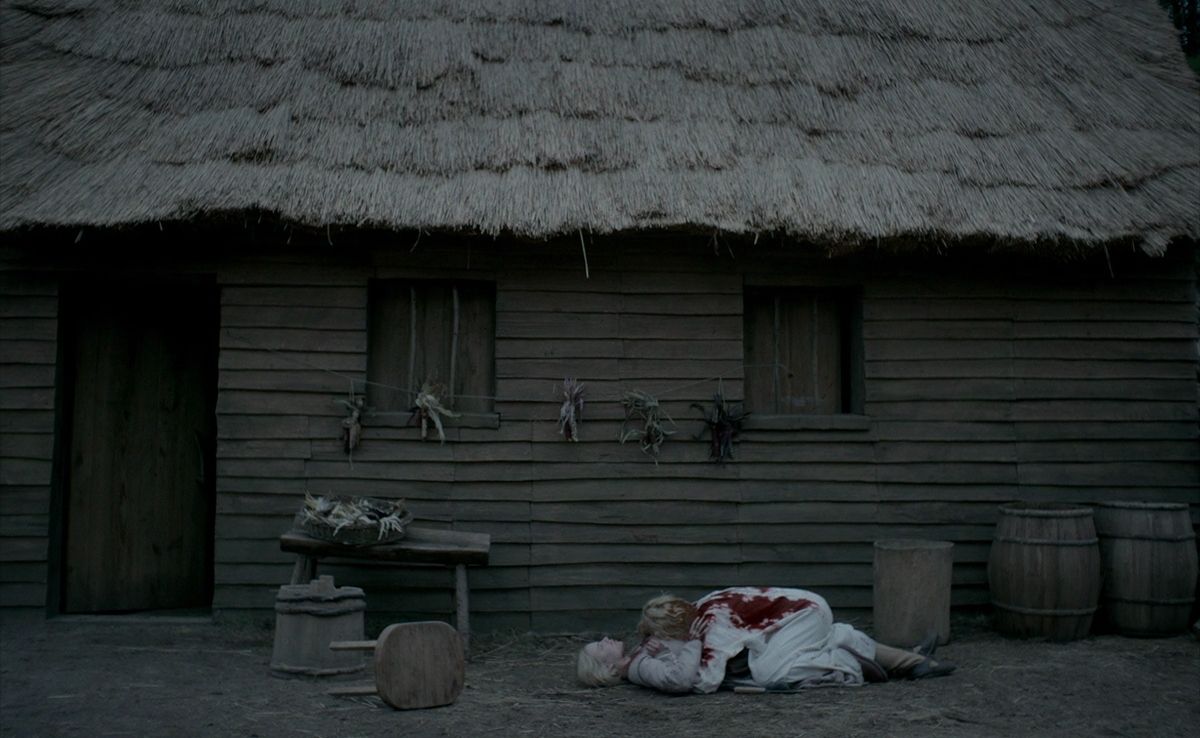
Eggers's visual language is nothing short of masterful, working with cinematographer Jarin Blaschke to create images of austere, terrible beauty. The film's 1.66:1 aspect ratio creates a boxy, confined frame that emphasizes the family's isolation and entrapment. The natural lighting—candles, fireplaces, overcast daylight filtering through windows—achieves period authenticity while creating shadows and textures that feel genuinely ominous.
The New England landscape becomes a character in its own right—the forest looming at the edge of the clearing, simultaneously beautiful and threatening, representing both physical danger and spiritual corruption. Eggers shoots the woods with reverent dread, understanding that for Puritans, wilderness represented not just physical peril but the domain of Satan himself. The film makes you feel that theological terror as visceral reality.
The production design represents one of cinema's most authentic recreations of colonial American life. Every detail—the rough-hewn timber construction, the period-accurate tools and implements, the sparse furnishings, the homespun clothing—feels researched rather than imagined. This authenticity serves the horror by making the supernatural intrusions feel more shocking against such carefully established realism.
Eggers's commitment to period language deserves particular recognition. The dialogue, drawn from actual 17th-century sources including journals, court records, and period literature, creates a linguistic barrier that initially challenges modern audiences but ultimately becomes essential to the film's otherworldly atmosphere. The archaic speech patterns make the characters feel genuinely removed from our time, inhabitants of a world where witchcraft and demonic possession represented literal rather than metaphorical threats.
Mark Korven's score achieves the impossible—creating music that sounds both period-appropriate and absolutely terrifying. The use of early instruments, discordant strings, and unsettling vocalizations creates soundscapes that feel ancient and malevolent. The famous scene of the witches' sabbath uses music that sounds like hymns from hell, familiar religious forms corrupted into something absolutely unholy.
The sound design emphasizes natural world sounds—wind through trees, animal noises, the creaking of the farmhouse—in ways that make the ordinary environment feel perpetually threatening. The film understands that effective horror often comes from making familiar sounds feel wrong, suggesting hidden presence through subtle audio manipulation.
The Witch's approach to its supernatural elements demonstrates sophisticated understanding of how to make the impossible feel real. The film shows us actual witchcraft—the opening scene's baby abduction and murder, the woods witch, Black Phillip revealed as Satan—but presents these elements with such matter-of-fact directness that they feel like documented reality rather than fantasy. Eggers refuses to make the supernatural "cool" or aestheticized; instead, it's portrayed as genuinely evil and corrupting.
The film's exploration of Puritan theology and psychology feels remarkably nuanced. Eggers doesn't simply mock religious extremism but takes seriously how these belief systems functioned, how they shaped perception and behavior, how faith could become both comfort and weapon. The family's destruction comes partly from external supernatural forces but equally from how their religious framework makes them vulnerable to paranoia and scapegoating.
The treatment of Thomasin's journey is particularly sophisticated. Her final transformation—signing the devil's book, joining the witches' sabbath—can be read as literal supernatural corruption or as metaphorical liberation from oppressive religious and patriarchal control. The film's genius lies in refusing to privilege either interpretation, allowing both to coexist in productive tension.
Eggers's direction maintains relentless control throughout, building dread through patient accumulation rather than cheap jumps. The pacing reflects the rhythms of period life—slow, deliberate, punctuated by moments of sudden violence or revelation. This approach requires tremendous confidence, trusting that audiences will engage with material that demands attention and patience.
The film's famous ending, with Thomasin rising naked into the night air among the gathered witches, provides one of horror's most ambiguous yet powerful conclusions. Whether read as damnation or liberation, the sequence achieves genuine sublimity—terrifying and beautiful simultaneously, suggesting that sometimes the only escape from one nightmare is surrendering to another.
The Witch's influence on subsequent horror has been profound, helping to establish "elevated horror" as both marketing category and genuine artistic movement. The film demonstrated that genre audiences would embrace challenging, artistically ambitious work that prioritized atmosphere and thematic depth over conventional scares.
The technical execution represents triumph of meticulous craft and historical research. Every element—from the hand-sewn costumes to the authentically constructed farmstead to the period-accurate prayers and incantations—serves the film's total immersion in its historical moment. This attention to detail transforms what could have been costume drama into genuine time travel.
What makes The Witch exceptional is how completely it succeeds at being both serious historical drama and effective horror film. The authenticity enhances rather than diminishes the terror, making the supernatural elements feel more genuinely threatening because they emerge from such carefully established realism.
The Witch stands as one of contemporary horror's supreme achievements, proof that the genre can achieve the highest levels of artistic ambition while maintaining its fundamental obligation to disturb and unsettle. Eggers created a film that honors both historical authenticity and horror tradition, demonstrating that these goals need not conflict but can enhance each other.
This is cinema as historical resurrection and nightmare fuel, a work that makes the past feel simultaneously more real and more terrifying than we could have imagined. In an era when period films often feel like museum exhibits, The Witch achieves something more dangerous and alive—it makes us feel what it might have been like to live in a world where evil wasn't metaphor but literal presence lurking just beyond the firelight. A masterpiece of atmosphere, authenticity, and accumulated dread that proves folk horror's capacity for genuine artistic excellence.