9/10
7/10
8.5/10
10/10
8.5/10
9.5/10
The Rot of the Granted Wish: When Love Becomes a Hostage Situation
There is an ancient, fundamental rule in horror that traces its roots all the way back to The Monkey’s Paw: never ask the universe for exactly what you want, because the universe has a profoundly sick sense of humor. In Obsession, a fiercely original and deeply disturbing indie nightmare, director Curry Barker exhumes this archaic trope and injects it with a lethal, suffocating dose of modern toxic entitlement. This is not a film about a boogeyman hunting teenagers in the woods, nor is it a traditional tale of demonic possession. It is a meticulous, agonizing anatomy of a profoundly selfish choice. It is a film about the terrifying reality of eradicating someone's free will, and the existential hellscape that opens up when a protagonist realizes that forcing someone to love you is, at its core, a spiritual murder.
The narrative tracks the slow-motion car crash of Bear (Michael Johnston), a paradigmatic "nice guy" hopelessly orbiting his charismatic, vibrant childhood friend and coworker, Nikki (Inde Navarrette). Frustrated by the friend zone and his own agonizing inadequacy, Bear comes into possession of a supernatural artifact—a conduit for a single, absolute wish. In a moment of supreme, cowardly ego, Bear wishes for Nikki to fall in love with him. It works. But Barker’s genius lies in the film's immediate, terrifying pivot from wish-fulfillment fantasy into an asphyxiating hostage situation. The Nikki that wakes up the next morning is not the girl Bear loved; her soul has been fundamentally overwritten. What remains is a violently devoted, volatile doppelgänger wearing her skin.
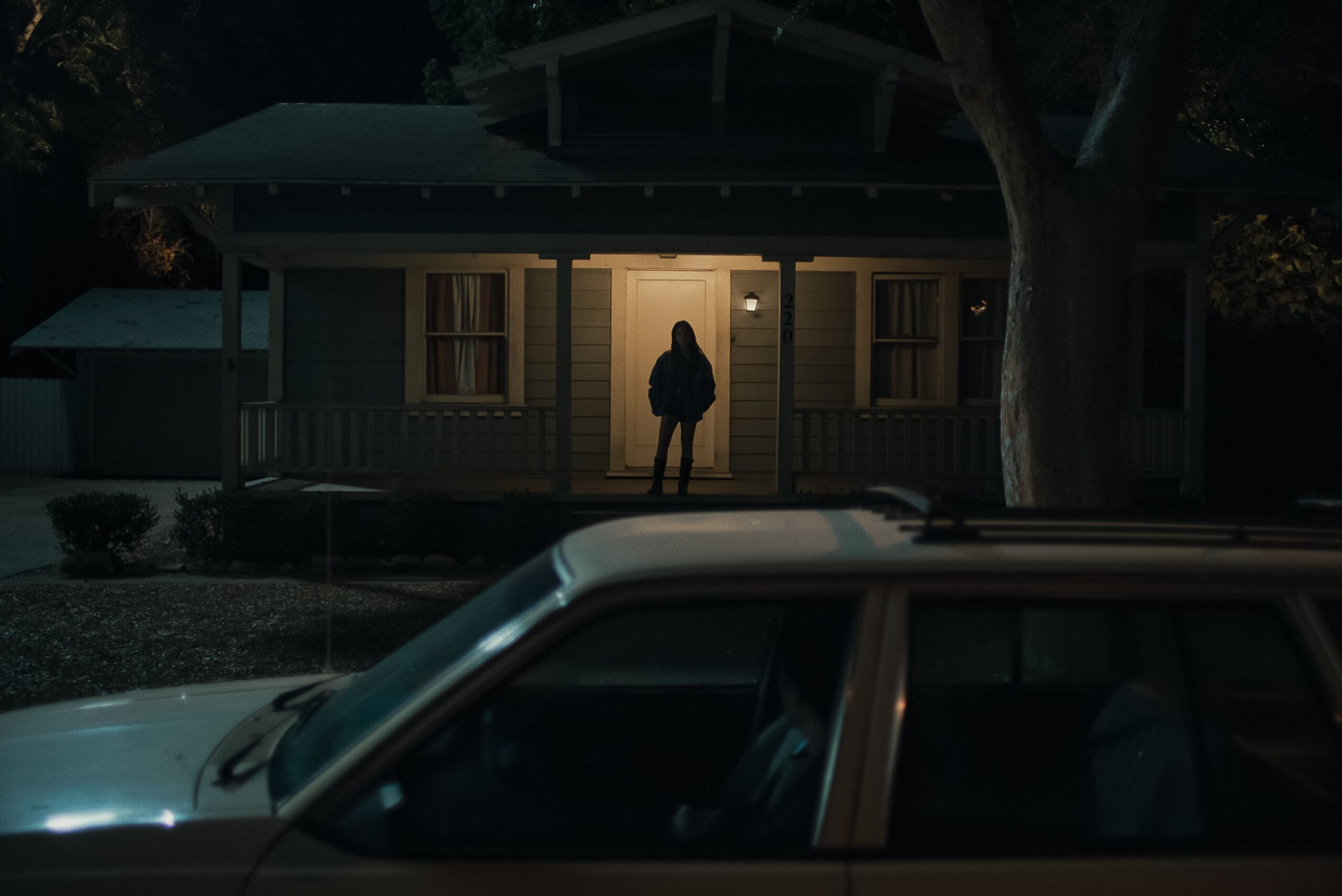
To say Inde Navarrette is phenomenal in this film is to fundamentally understate the architectural weight she carries. She delivers one of the most terrifying, and ultimately tragic performances in recent genre history, tasked with an incredibly difficult high-wire act of dual identity. Barker gives Navarrette just enough time in the first act to establish Nikki as a fiercely independent, sarcastic, and luminous young woman. When the wish takes effect, Navarrette doesn't simply act "crazy"—she portrays the total collapse of a human soul. She navigates this uncanny valley with bone-chilling precision, weaponizing her body language so that a previously comfortable physical proximity suddenly feels deeply, stomach-churningly invasive. She flips between darkly comedic clinginess and feral, stalker-like menace in the exact same breath. There is a specific, unforgettable sequence where she visits Bear late at night; Barker lights the scene to catch an unnatural, predatory glint in her eyes. It is a delightfully janky, brilliant artistic touch that makes the film feel uniquely special, stripping away her humanity and leaving behind a terrifying vacuousness. She is a marionette whose strings are being pulled by a dark magic she cannot comprehend. It is a performance of profound tragedy, anchoring the supernatural premise in something painfully human.
Opposite her, Michael Johnston is perfectly cast as the architect of his own destruction. Bear is an entirely pathetic figure, and Johnston plays him with a brilliant, sweaty conviction that refuses to ask for the audience's sympathy. We watch his initial, pathetic triumph rapidly curdle into suffocating panic. His apartment transforms from a bachelor pad into a prison cell. His face becomes a perpetual mask of shame, exhaustion, and despair. Yet the true, lingering horror of Bear's character is his refusal to undo the damage. Confronted with the monster he has made, he continuously doubles down on his despicable choice, paralyzed by the realization that reversing the wish means returning to a reality where Nikki simply does not want him. He becomes the warden of a prison built entirely out of his own insecurity.
It must be noted that Obsession does not possess the mathematically precise, diorama-like polish of a film by Ari Aster, nor the austere, museum-grade framing of Robert Eggers. But to view that lack of glossy, big-studio sheen as a negative would be a fundamental misunderstanding of what makes this film so incredibly effective—especially when considering the astonishing reality that this is Curry Barker’s feature directorial debut. For a first-time filmmaker to step behind the camera and execute a vision this tonally audacious is nothing short of a revelation. Its raw, kinetic energy is exactly where its charm and its terror reside. You can feel Barker bleeding his entire heart into every single frame of this production, pouring the kind of unbridled, hungry passion into the project that seasoned directors often lose after years in the studio machine. The camera work is urgent and intimate, stripping away the artificial distance that a larger budget often creates between the audience and the screen.
Barker leverages this gritty aesthetic to his absolute advantage, making highly intentional, lo-fi visual choices that amplify the dread. There are agonizing stretches where Nikki is kept entirely in the dark or obscured by heavy, oppressive shadows, actively preventing the viewer from getting a clear look at her. It is a masterful, suffocating choice that elevates the horror of a scene, forcing our own imaginations to project our worst fears onto the silhouette of a woman we thought we knew. Because it isn't polished to a mirror shine, the nightmare feels alarmingly immediate and uncomfortably real—like stumbling onto a cursed home video you were never meant to see. Barker compensates for a modest budget and his own debut status with pure, unapologetic ambition, taking massive thematic and tonal swings that a sanitized studio executive would have undoubtedly vetoed.
Where the film’s craft truly transcends its indie roots is in its spectacular audio design, which stands as one of the most impressive parts of the film. The soundscape of Obsession is a standalone character, a masterclass in auditory claustrophobia. Barker does not rely on booming orchestral stings or manufactured jump-scare chords. Instead, the audio design weaponizes the quiet of domestic isolation. The horror is found in the sickeningly subtle shifts in Nikki’s vocal mixing—a voice that sounds just a fraction of a pitch off, hollowed out and lacking its previous warmth. It is in the heavy, oppressive silence of Bear's living room, punctuated only by the erratic, unpredictable sounds of Nikki moving in the shadows of the kitchen. The mix traps the audience entirely within Bear’s escalating panic attack, making the viewer feel physically cornered by the sound of a lover's footsteps.
By the time the film spirals into its bloody, unhinged climax, the air in the room feels thick and hard to breathe. Barker masterfully utilizes elements of pitch-black comedy to periodically release the tension, lulling the audience into a nervous chuckle, only to snap the trap shut again with twice the ferocity. It is a brilliant, vicious cycle that leaves the viewer completely exhausted.
Obsession is a fresh, harrowing triumph that proves a beating heart, a terrifying conceptual hook, and a pair of phenomenal lead performances will always eclipse a massive budget. It operates as a deeply unsettling deconstruction of romantic comedy tropes, exposing the darkest, most violent corners of male entitlement. It is an exhaustive exploration of what happens when we treat another human being not as a person, but as a prize to be won at any cosmic cost. Barker has crafted a little film with massive, jagged teeth—one that sinks its jaws into your psyche and refuses to let go, leaving you drained, disturbed, and absolutely convinced that a major new voice in psychological horror has arrived.