7/10
6.5/10
8/10
7.5/10
10/10
9.5/10
The Fever Dream That Ate Cinema: Horror as Pure Hallucination
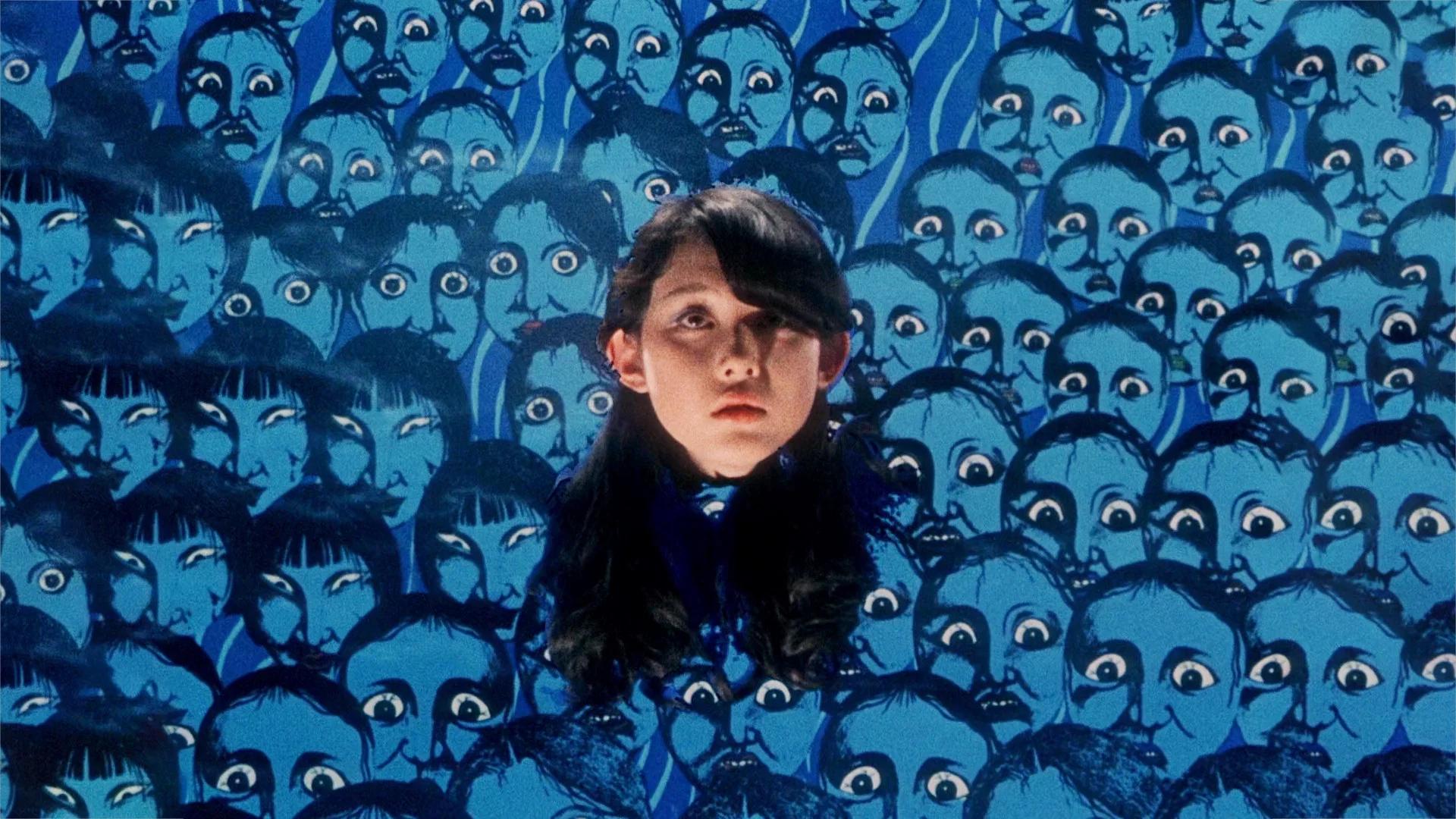
Nobuhiko Obayashi's House doesn't simply break the rules of horror cinema—it exists in a reality where those rules were never written, operating according to logic so purely dreamlike and surreal that calling it a "film" feels insufficient. This is something else entirely: a candy-colored nightmare, a collision between Disney fairy tale and gut-wrenching body horror, a work so singularly bizarre and unclassifiable that nearly five decades after its creation, nothing else remotely resembles it. Made by a commercial director with input from his pre-teen daughter and assembled using every optical effect and filmmaking trick imaginable, House represents experimental horror at its most joyfully unhinged—a film that proves genuine originality often comes from ignoring every convention about what horror is supposed to be.
The plot, such as it is, follows seven schoolgirls—each named for their defining characteristic (Gorgeous, Melody, Prof, Kung Fu, Sweet, Fantasy, Mac)—who visit Gorgeous's aunt's countryside house and are systematically consumed by the dwelling and its supernatural resident. But plot summary feels almost beside the point. What matters is not the narrative but the experience—a kaleidoscopic assault of impossible imagery, intentionally artificial effects, and tonal shifts so extreme they induce genuine disorientation.
Obayashi's visual language is nothing short of revolutionary, rejecting every principle of cinematic realism in favor of pure expressionism. The film employs painted backdrops that make no attempt to look real, matte paintings that shift and shimmer, rotoscoped animation, split-screen compositions, psychedelic color filters, and optical effects that range from sophisticated to deliberately crude. The house itself becomes a living entity rendered through constant visual transformation—rooms that change size and dimension, spaces that defy physics, furniture that moves with predatory intent.
The genius of Obayashi's approach is how the artificial effects actually enhance rather than diminish the horror. When a girl is eaten by a piano, the deliberately fake compositing makes the moment more disturbing, not less—it suggests we've entered a reality where normal physics don't apply, where anything can happen because we're operating in pure nightmare logic. The famous sequence of severed fingers playing piano keys works precisely because it looks like a children's storybook illustration come to horrifying life.
The performances exist in that impossible space between naturalistic and theatrical, the young actresses playing their characters with wide-eyed earnestness that makes the escalating surrealism feel both more absurd and more unsettling. Kimiko Ikegami as Gorgeous anchors the film with a performance that gradually reveals depths of selfishness and cruelty beneath her perfect exterior, while Yoko Minamida as the aunt creates one of cinema's most memorable haunted house ghosts—eternally young, desperately lonely, feeding on the vitality of visiting girls to maintain her existence.
The film's approach to horror imagery is gleefully excessive and inventive. A girl attacked by futons. A disembodied head flying through the air biting people. A cat with human eyes. Blood flowing from walls like a broken faucet. Obayashi treats each death sequence like an opportunity for visual experimentation, finding new ways to make the familiar (haunted house kills schoolgirls) feel utterly alien and unprecedented.
Asei Kobayashi and Mickie Yoshino's score deserves recognition as one of horror's most delightfully bizarre musical achievements. The main theme sounds like children's music composed by someone losing their mind, combining innocent melodies with increasingly discordant arrangements. The music shifts constantly—sweet and melodic one moment, absolutely deranged the next—mirroring the film's tonal chaos while somehow maintaining coherence.
The sound design embraces artificiality as aesthetic choice. Footsteps sound exaggerated, doors creak with theatrical emphasis, screams are sometimes played for comedy and sometimes for genuine horror. The audio landscape refuses to let viewers settle into any comfortable relationship with what they're experiencing, constantly shifting registers between playful and terrifying.
House's exploration of themes—post-war trauma, female adolescence, the corruption of innocence, the consuming nature of unfulfilled desire—operates beneath the surface chaos. The aunt's backstory, waiting eternally for a fiancé killed in World War II, transforms the house into manifestation of grief and arrested development. The film suggests that trauma can literally consume the living, that houses can become prisons for emotions too powerful to process.
The film's treatment of its seven heroines, each reduced to single characteristic, works as both gentle satire of archetypal characterization and exploration of how young women are reduced to simplified roles by society's gaze. That they're systematically destroyed by the house feels both horrific and somehow inevitable—innocence can't survive contact with trauma and obsession.
Obayashi's direction shows absolute confidence in his singular vision, never apologizing for the film's weirdness or attempting to ground it in conventional horror aesthetics. He understands that House works precisely because it commits completely to its own internal logic, however bizarre that logic might be. The film's pacing maintains relentless forward momentum, each sequence building on the previous one's strangeness until the cumulative effect becomes genuinely overwhelming.
The production design creates environments that feel like stage sets come to life—deliberately artificial yet somehow more emotionally true than realistic locations could achieve. The house's interior transforms constantly, rooms expanding and contracting, spaces connecting in impossible ways, the entire structure revealed as organism rather than architecture.
The technical execution represents triumph of imagination over budget, using commercial filmmaking tricks, optical effects, and sheer audacity to create imagery that expensive Hollywood productions couldn't match. The film proves that genuine visual innovation comes from creative problem-solving and willingness to embrace unconventional approaches rather than simply throwing money at effects.
House's influence on subsequent horror has been profound yet difficult to trace, as few filmmakers possess Obayashi's particular combination of commercial experience, experimental impulse, and absolute fearlessness. Elements of the film's DNA can be detected in everything from Evil Dead II to Hausu to contemporary Japanese horror's willingness to embrace surrealism and tonal chaos.
What makes House endure as cult masterpiece is its absolute uniqueness—this is a film that could only have been made under very specific circumstances (Japanese studio willing to fund experimental horror, director with commercial experience but no feature film baggage, creative input from a child's imagination). It exists as one-of-a-kind artifact, unrepeatable and unclassifiable.
The film's final sequences, as the house consumes all the girls and Gorgeous transforms into her aunt, provide resolution that's both narratively satisfying and completely insane. The cycle continues, innocence consumed to feed eternal youth, trauma perpetuating itself across generations. That this profound thematic conclusion is delivered through bonkers visual effects and impossible imagery makes it no less emotionally resonant.
House stands as proof that horror cinema's potential for genuine originality remains limited only by filmmakers' courage to abandon convention completely. It's a work that doesn't simply push boundaries—it exists in a space where boundaries never existed, creating something so purely itself that attempts to categorize or explain it feel almost beside the point.
This is cinema as fever dream, as children's nightmare, as experimental art project disguised as genre entertainment. In a medium often constrained by audience expectations and commercial considerations, House represents pure creative freedom—a film that does exactly what it wants, however impossible or absurd, and emerges as something genuinely unprecedented. It's not just one of a kind—it's one of a kind in ways that ensure it will remain singular forever, a beautiful, terrifying, absolutely insane masterpiece that proves horror's capacity for infinite reinvention.