10/10
1/10
9/10
10/10
10/10
10/10
A Parasite on the Lens: The Exhausting Reality of Murder
There is a sanitized, almost mythic quality to how cinema traditionally presents the serial killer. They are usually painted as brilliant tacticians, shadowy phantoms of the night, or charismatic monsters playing an intricate game of chess with the authorities. Gerald Kargl’s 1983 Austrian masterpiece, Angst, takes a sledgehammer to this romanticized falsehood. Based on the true story of mass murderer Werner Kniesek, the film is a grueling, visceral, and unapologetically ugly plunge into the mind of a psychopath. It is a completely unique, genuinely anxiety-inducing experience from its opening frame to its sickening conclusion. It stands as a towering pillar of transgressive cinema, possessing a chaotic, restless energy that is so profoundly unsettling it directly birthed a new language of cinematic extremity—it is no coincidence that Gaspar Noé, who provides the introduction to the film on its Cult Epics Blu-ray release, cites Angst as one of his greatest foundational influences.
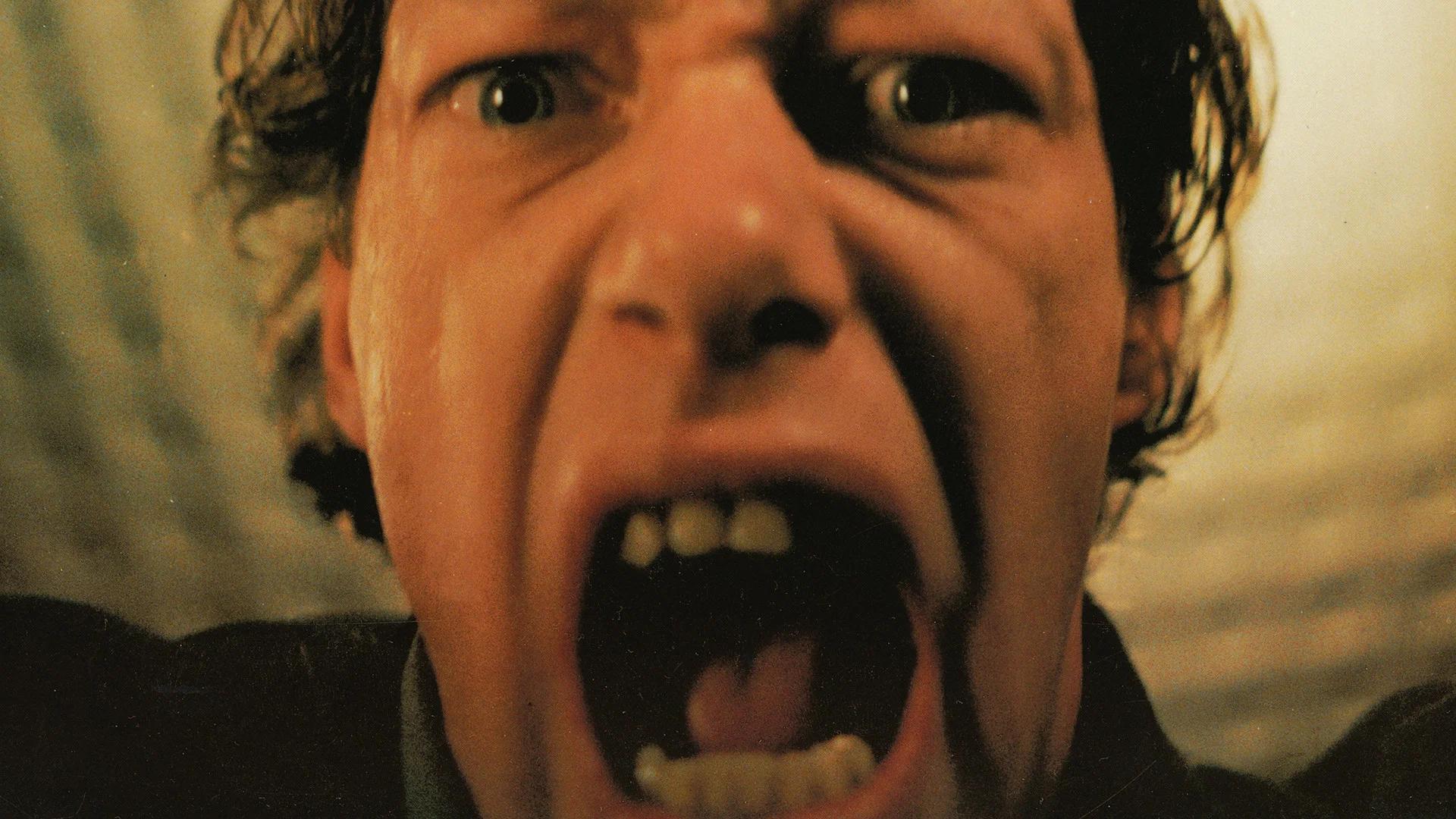
The terror of Angst lies in its relentless, suffocating intimacy. We follow The Psychopath (Erwin Leder) as he is released from a ten-year prison sentence, only to immediately—within hours of tasting freedom—succumb to the overwhelming, biological compulsion to kill again. There is no grand design, no eloquent motive, and no moral reckoning. The narrative is driven entirely by a continuous, chilling voiceover of the killer’s internal monologue, lifted directly from the real-life murderer's psychiatric reports. Leder’s performance is terrifying precisely because he plays the killer not as a genius, but as a rabid, pathetic animal running purely on base instinct. His twitching, desperate body language conveys a man who is a hostage to his own sadistic urges, wandering aimlessly until he randomly targets an isolated rural home occupied by an elderly mother, her disabled son, and her young daughter.
What catapults the film into the stratosphere of visual horror, and what so deeply influenced Noé’s own disorienting style, is the revolutionary cinematography by Zbigniew Rybczyński. Long before the advent of lightweight GoPros or Steadicams, Rybczyński designed a custom, body-mounted camera rig harnessed directly to Leder. The result is a visual language that feels inherently parasitic. The camera floats erratically, locked onto the killer’s sweat-drenched face as he moves through space, forcing the audience into a sickeningly close, distorted proximity. When it isn't tethered to his body, the camera swoops down from impossible, omniscient high angles, or glides inches above the floor, employing ultra-wide lenses that stretch and warp the suburban environment into a funhouse mirror of domestic dread. We are trapped inside his spatial reality, dragged along on his chaotic, hyper-ventilating descent.
This visual vertigo is perfectly counterbalanced by the legendary electronic score composed by Klaus Schulze of Tangerine Dream. Rather than relying on traditional orchestral cues to dictate the audience's fear, Schulze’s music is a cold, pulsing, synthesizer drone that operates with total, chilling detachment. The rhythmic, mechanical beats of the score contrast horrifyingly with the messy, frantic desperation of the violence on screen. The music does not care about the victims; it hums with the same chilling indifference as the universe itself, scoring the internal, singular obsession of the killer rather than the tragedy of his actions.
When the home invasion inevitably occurs, Angst delivers one of the most agonizing, realistic depictions of violence ever put to film. The murders are not stylized, choreographed, or efficient. They are unbelievably clumsy, exhausting, and pathetic. Kargl strips away the Hollywood illusion of murder to reveal a chaotic, slippery struggle. The killer slips in blood, drops his weapons, pants heavily in sheer exhaustion, and desperately wrestles with the dead weight of his victims. The sheer physical exertion required to take a human life is captured with nauseating authenticity. Adding to this surreal, visceral chaos is the family’s frantic dachshund, darting around the blood-soaked floors—a jarring, mundane detail that anchors the nightmare in a terrifying, inescapable reality.
Angst is not a film that attempts to entertain; it is a film that intends to infect. It is a grueling, 80-minute panic attack that forces the viewer to share the oxygen of a remorseless predator. By refusing to cut away, refusing to moralize, and refusing to grant the audience any structural comfort, Kargl created an absolute masterpiece of psychological horror. It is a film that crawls under your skin and lays eggs, an uncompromising, suffocating journey into the void that leaves you feeling dirty, drained, and forever glancing over your shoulder.